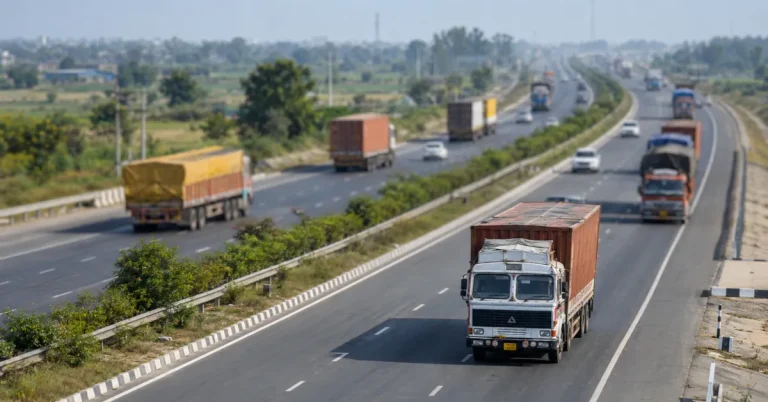
The Union Cabinet has approved the construction of a 4-lane, access-controlled Barabanki-Bahraich section of National Highway 927, aimed at significantly improving connectivity to Shravasti, a key Buddhist heritage site in Uttar Pradesh.
According to a statement by the Ministry of Road Transport and Highways on Thursday, 26 March, the 101.51 Km highway project will be developed at a total capital cost of ₹6,969.04 crore under the Hybrid Annuity Mode.
The ministry said the project is expected to enhance travel efficiency by increasing average vehicle speeds from 40 Kmph to 80 Kmph and reducing travel time between Barabanki and Bahraich by nearly 50 per cent, from around 150 minutes to 75 minutes.
Shravasti, which holds deep spiritual significance in the Buddhist world as a place where Lord Buddha spent several monsoon seasons and delivered many of his teachings, has long faced connectivity challenges that limited its tourism potential.
Improved road connectivity is expected to boost both domestic and international Buddhist religious tourism, particularly from countries such as Thailand, Sri Lanka, Japan, and Myanmar, which share strong cultural and spiritual ties with Buddhist sites in India.
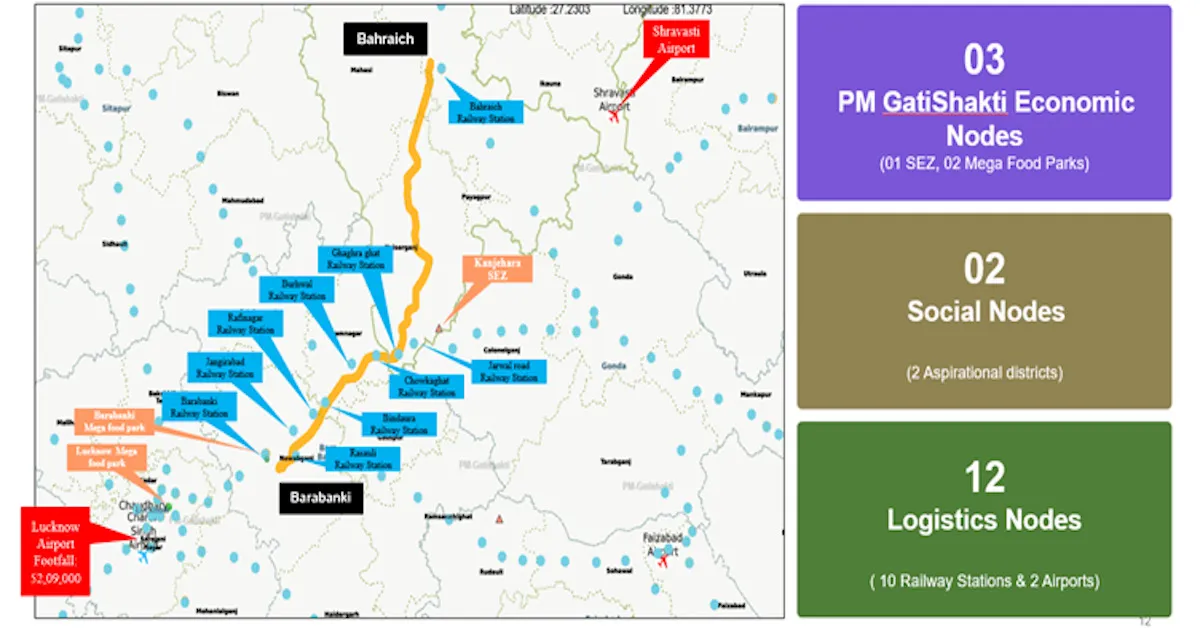
The highway will also strengthen multi-modal connectivity by linking key national highways including NH-27, NH-330B, and NH-730, along with state highways SH-13 and SH-30B.
It will provide access to major transport hubs including Lucknow and Shravasti airports, multiple railway stations such as Barabanki, Rasauli, Jangirabad, Rafinagar, Bindaura, Burhwal, Chowkaghat, Ghaghraghat, Jarwal, and Bahraich, as well as the Rupaidiha land port.
The major towns covered under the project will be Barabanki, Ramnagar, Jarwal, Kaisarganj, Fakharpur and Bahraich.
The project is expected to connect three economic nodes including Special Economic Zones and Mega Food Parks, two social nodes covering aspirational districts, and 12 logistics nodes.
According to the ministry, the highway will also contribute to economic development in the region by generating 36.54 lakh person-days of direct employment and 43.04 lakh person-days of indirect employment.