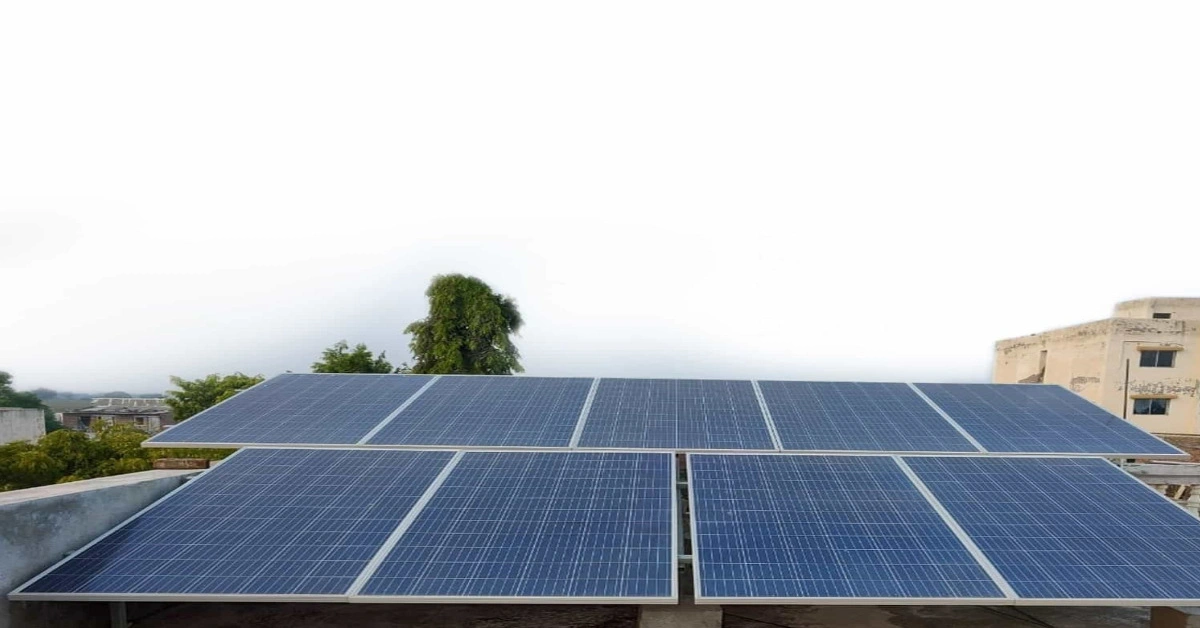
The Centre has received more than 63 lakh applications under the PM Surya Ghar: Muft Bijli Yojana, while over 25 lakh rooftop solar systems have already been installed, the Parliament was informed.
According to a written reply in the Rajya Sabha by the Union Minister of New and Renewable Energy Shripad Naik, a total of 63,26,125 applications have been received on the National Portal, and 25,02,217 rooftop solar systems have been installed across the country as on 5 March 2026 under the scheme.
The ₹75,000 crore PM Surya Ghar: Muft Bijli Yojana, launched in February 2024, is a demand-driven initiative aimed at encouraging residential consumers with grid-connected electricity connections to install rooftop solar systems.
Read also : Lakshadweep set to host India’s first OTEC-powered desalination plant using deep-sea cold water technology
Consumers can apply through the scheme’s national portal to avail the benefits for installing solar panels on their homes.
The scheme is designed to expand rooftop solar capacity across the country while helping households generate their own electricity and reduce power bills.
According to the data shared by the minister, over ₹22,000 crore have been allocated and utilised under the programme over FY25 and FY26.
For 2024-25, the revised estimate stands at ₹11,100 crore, with ₹7,822.92 crore spent, while for 2025-26, the revised estimate is ₹17,000 crore, with ₹14,585.29 crore utilised as on 5 March 2026.
The state-wise data shared by the minister shows strong adoption across several large states including Maharashtra, Gujarat, Uttar Pradesh and Kerala, which account for a significant share of applications and installations under the scheme.
Read also : India’s electricity supply nearly matches demand as energy deficit shrinks to almost nil in FY26