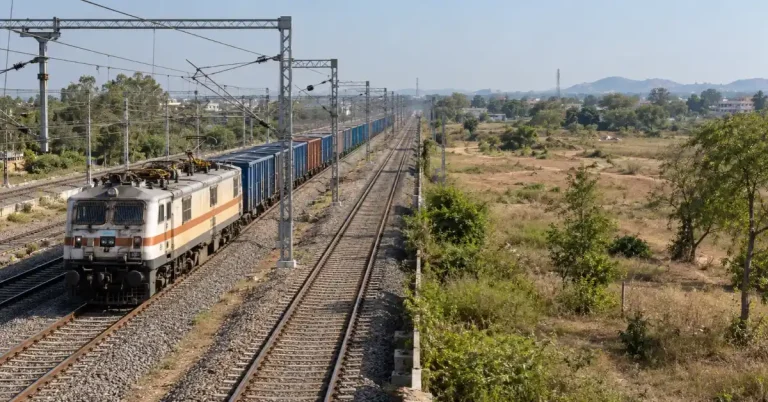
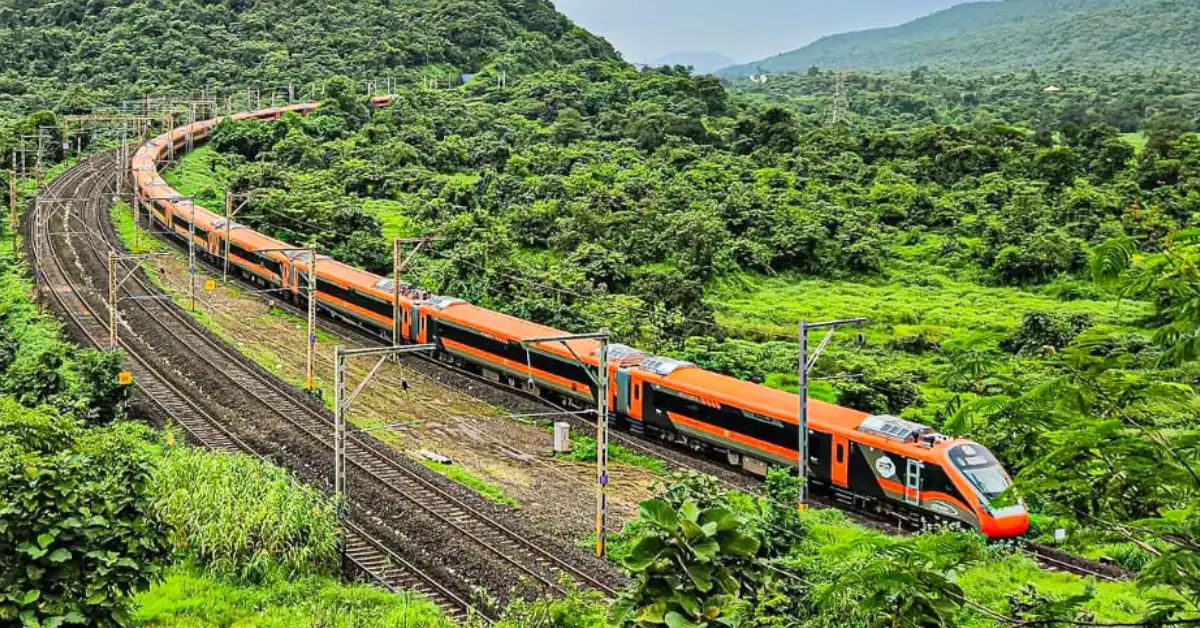
Indian Railways high-speed track network expands sharply; 130+ Kmph sections nearly quadruple since 2013-14 as Indian Railways has significantly expanded its high-speed track infrastructure, with sections capable of supporting speeds of 130 Kmph and above increasing nearly fourfold since 2013-14, according to data provided by the Rail Ministry in Parliament.
The network of such high-speed sections has grown from 5,036 Km in 2013-14 to 23,477 Km as of January 2026, now covering 22.2 per cent of the total railway network.
The sharp rise reflects a sustained push to modernise track infrastructure and improve operational efficiency across Indian Railways.
Beyond the top-tier speed category, tracks supporting speeds between 110 Kmph and 130 Kmph expanded from 26,409 Km (33.3 per cent) in 2013-14 to 61,711 Km (58.4 per cent) by January 2026, which means that 80.6 per cent of the rail network is now capable of speeds above 110 Kmph.
Meanwhile, slower sections with speed potential below 110 Kmph have reduced sharply from 47,897 Km (60.4 per cent) to 20,484 Km (19.4 per cent), underscoring the ongoing transition toward faster rail corridors.
Overall, the total rail network has expanded from 79,342 Km to 1,05,672 Km during the same period.
The Railways attributed this transformation to a series of technological and engineering upgrades carried out over the past decade.
Modern track structures using 60 kg, 90 Ultimate Tensile Strength rails, wider pre-stressed concrete sleepers with elastic fastening, and fan-shaped turnout layouts have been deployed during primary renewals to enhance stability and ride quality.
Safety and reliability improvements have also played a critical role. Electrical and electronic interlocking systems have been installed at 6,660 stations, while interlocking has been provided at 10,097 level crossing gates to strengthen operational safety.
Automatic Block Signalling has been commissioned over 6,625 route Km, and the indigenously developed Kavach Automatic Train Protection system – adopted as a national standard in July 2020 – has been successfully deployed on 1,297 route Km, including high-density sections of the Delhi-Mumbai and Delhi-Howrah corridors.
Additional measures such as mechanised maintenance, advanced rail testing technologies, integrated track monitoring systems, flash butt welding, and the use of long rail panels have further supported higher permissible speeds while improving safety margins.
Despite the progress, the ministry clarified that the average speed of train services depends on several factors including Maximum Permissible Speed (MPS) of the section, track structure, geometry along the route including gradients and curves, topographical conditions, number of stoppages enroute, line capacity utilisation of sections, maintenance works in the section etc.
Read also : Railways says calibrated fare hikes followed 5-year gap, impact kept minimal