Smart meter installations under the Revamped Distribution Sector Scheme (RDSS) reached 3.90 crore as of 31 December 2025, the government informed the Rajya Sabha.
Further, the total number of smart meter installations, including those done by the states, have reached 5.28 crore.
The update was provided in a written reply by Minister of State for Power Shripad Naik, who stated that the RDSS was launched in July 2021 to support States and Union Territories in improving the operational efficiency and financial sustainability of distribution utilities while ensuring reliable electricity supply.
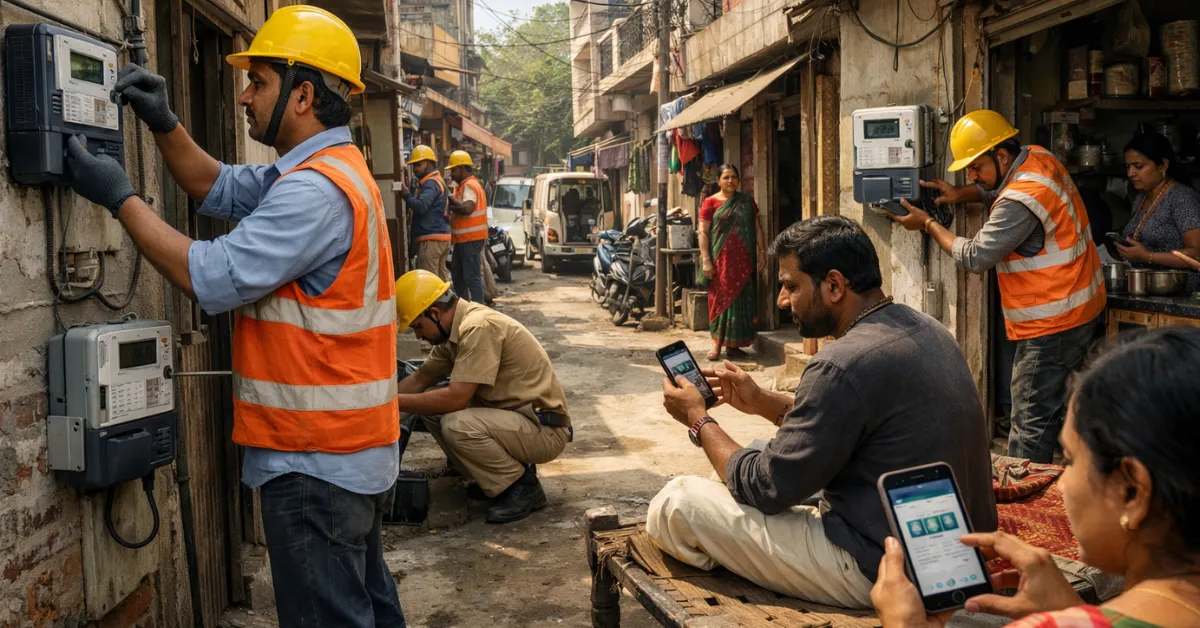
One of the scheme’s key initiatives is the smart metering of consumers, distribution transformers, and feeders.
Under RDSS, smart metering works have been sanctioned for 45 distribution utilities across 28 States and Union Territories, covering 19.79 crore consumers, 52.53 lakh distribution transformers, and 2.05 lakh feeders.
The minister added that installations undertaken by States through their own programmes and other schemes have taken the overall number of smart meters installed nationwide to 5.28 crore as on 31 December 2025.
“In addition, smart meters have been installed by States under their Stateplans/ other schemes. Overall, 5.28 crore smart meters have been installed across the country under various schemes as on 31st December 2025,” the minister said.
The minister noted that prepaid smart metering benefits both distribution companies and consumers by enabling advance revenue collection, improving billing efficiency, reducing receivables, lowering working capital requirements, and strengthening DISCOM cash flows.
For consumers, smart meters provide near real time consumption visibility through mobile applications enabling budgeting and consumption monitoring.
Further, these applications also provide convenience of recharge, low balance SMS/Push alerts and historical graphs for usage optimization.
According to the minister, reform measures, including smart metering, have contributed to a decline in Aggregate Technical and Commercial losses from 21.91 per cent in FY2021 to 15.04 per cent in FY2025, indicating improved efficiency across the power distribution segment.
To address cyber security and data privacy concerns, the Standard Bidding Document for RDSS smart metering outlines provisions for securing communication infrastructure, meeting cloud security requirements, managing cyber incidents, and complying with the Digital Personal Data Protection framework.
The government also noted that CSIRT-Power has been set up to assist utilities in handling cyber incidents and strengthening preparedness in the power sector.
Consumer awareness programmes are also being undertaken by distribution utilities and nodal agencies, including pamphlet distribution, banner installations at high-footfall locations, vernacular outreach campaigns, workshops during smart meter installations, and social media engagement to improve adoption and dispel misconceptions about prepaid smart meters.