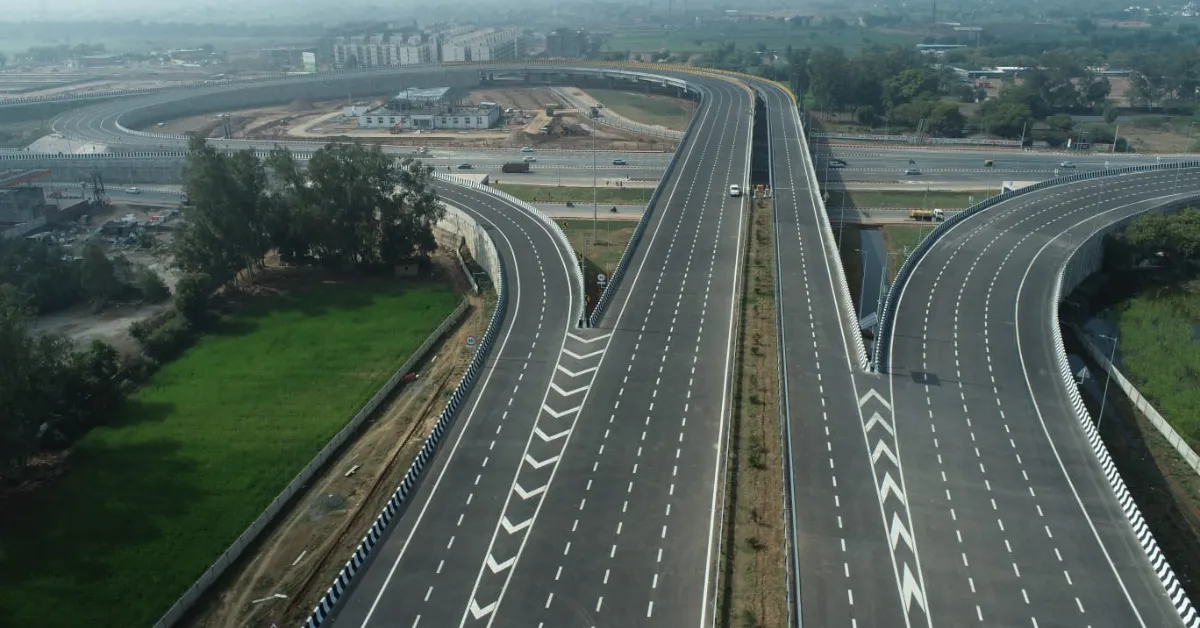
Construction of the Delhi-Mumbai Expressway, a 1,386-kilometre, eight-lane greenfield corridor, has reached an advanced stage across Gujarat, where about 426 kilometres of the alignment are under development, Desh Gujarat reported.
While large sections of the expressway in the state are already operational or close to completion, delays across three packages in southern Gujarat continue to hold back full corridor connectivity.
The Gujarat alignment is divided between the Delhi-Vadodara and Vadodara-Virar corridors and is being executed through multiple construction packages. On the Delhi-Vadodara side, progress is nearing completion.
Of the 31 packages forming this corridor, six fall within Gujarat. Five of these packages are fully complete, while one package near the Gujarat-Madhya Pradesh border in Dahod district remains under construction.
This 30-kilometre stretch has achieved 77 per cent physical progress and is the only major unfinished link on this section within Gujarat. Another package on this corridor is largely complete, with work pending at a limited location due to the shifting of low high-tension power lines.
With the Madhya Pradesh section already operational, completion of the remaining works in Gujarat would allow uninterrupted expressway travel between Ahmedabad and central India.
The Delhi-Vadodara section is projected to become operational by mid-2026.
Progress on the Vadodara-Virar corridor is uneven. The northern portion within Gujarat is already operational, allowing continuous expressway movement from the NE1 Ahmedabad-Vadodara Expressway interchange through Surat district up to the Kharel Interchange near Gandeva in Navsari.
This stretch is an uninterrupted operational segment of the expressway within Gujarat.
Construction momentum drops sharply further south. Package 8, a 35-kilometre stretch from Gandeva to Jujuwa, has recorded only 5 per cent physical progress. Package 9, covering 27 kilometres from Jujuwa to Karvad, has reached 10 per cent completion, while Package 10, a 25-kilometre stretch from Karvad to the Talasari Interchange near the Maharashtra border, has achieved 42 per cent progress, showing only marginal improvement.
Together, these three packages account for 87 kilometres, or just over one-fifth of Gujarat’s total expressway length, and remain the principal reason for delays in completing the corridor within the state.
The National Highways Authority of India has terminated the contract for Package 8 and issued a fresh tender for the remaining work on this stretch, with completion targeted within around 1.5 years from the March tender opening.
Similar action may also be taken for Packages 9 and 10 to accelerate progress on the southern Gujarat section.
The Union government had earlier informed Parliament that the entire Delhi-Mumbai Expressway would be completed by October 2025, a deadline that has since been missed.
While most of Gujarat’s portion of the project is either complete or nearing readiness, continued delays across the southern packages indicate that full operationalisation of the expressway corridor in the state is unlikely in the near term, with some sections projected to open by mid-2026.