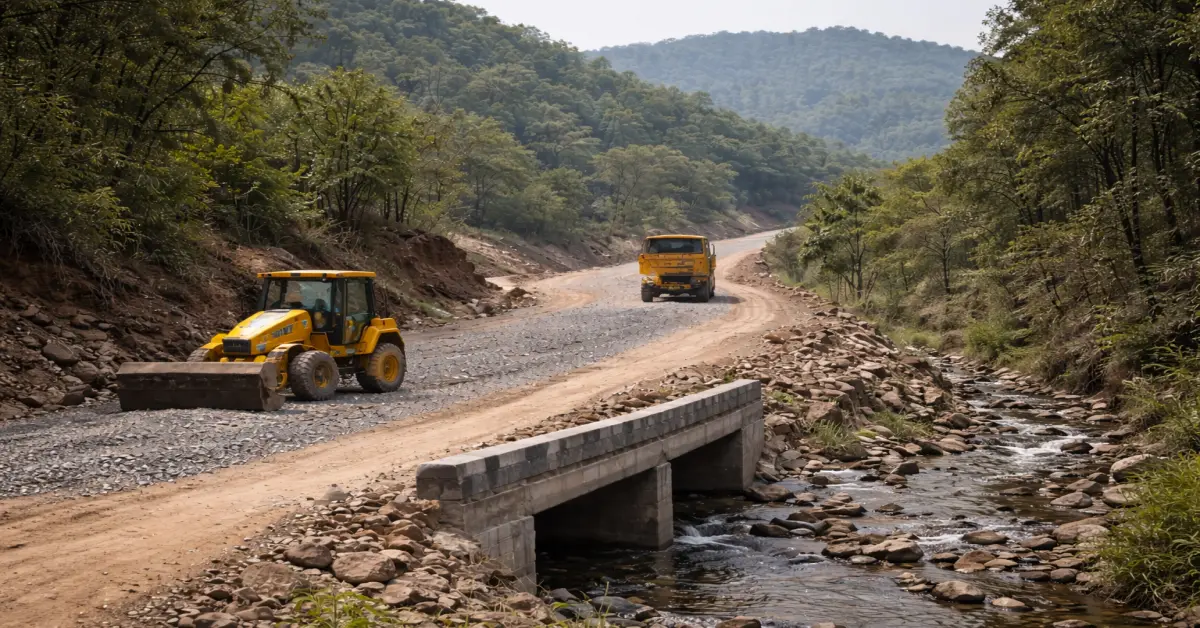
The Union government has sanctioned more than 10,000 kilometres of rural road projects across five states and one Union Territory – Jammu and Kashmir (UT), Chhattisgarh, Uttarakhand, Rajasthan, Himachal Pradesh and Sikkim – under Pradhan Mantri Gram Sadak Yojana-IV (PMGSY-IV), expanding last-mile connectivity in remote and rural regions.
According to the Ministry of Rural Development, the newly approved road works are expected to connect around 3,270 habitations that were previously isolated due to terrain constraints and lack of infrastructure. The connectivity is aimed at improving access to healthcare, education, markets and essential services, particularly in hilly, tribal and geographically difficult areas.
Under PMGSY-IV, 25,000 unconnected habitations identified as per the 2011 Census are targeted for road connectivity. The eligibility criteria include habitations with a population of 500 and above in plains, 250 and above in hill and North-Eastern states and UTs, and 100 and above in Left Wing Extremism-affected districts, along with special category areas such as Scheduled Tribe regions, Aspirational Districts and desert areas.
The scheme aims to construct 62,500 kilometres of all-weather rural roads, along with necessary bridges along the road alignments, to ensure year-round access to villages currently cut off during adverse weather conditions.
PMGSY-IV was approved by the Union Cabinet on 11 September 2024 for implementation during FY 2024-25 to 2028-29. The programme carries a total financial outlay of Rs 70,125 crore, comprising a central share of Rs 49,087.50 crore and a state share of Rs 21,037.50 crore.
Officials said the expanded rural road network is expected to strengthen economic activity, improve service delivery and support inclusive growth in underserved regions, particularly in border, hill and tribal districts.