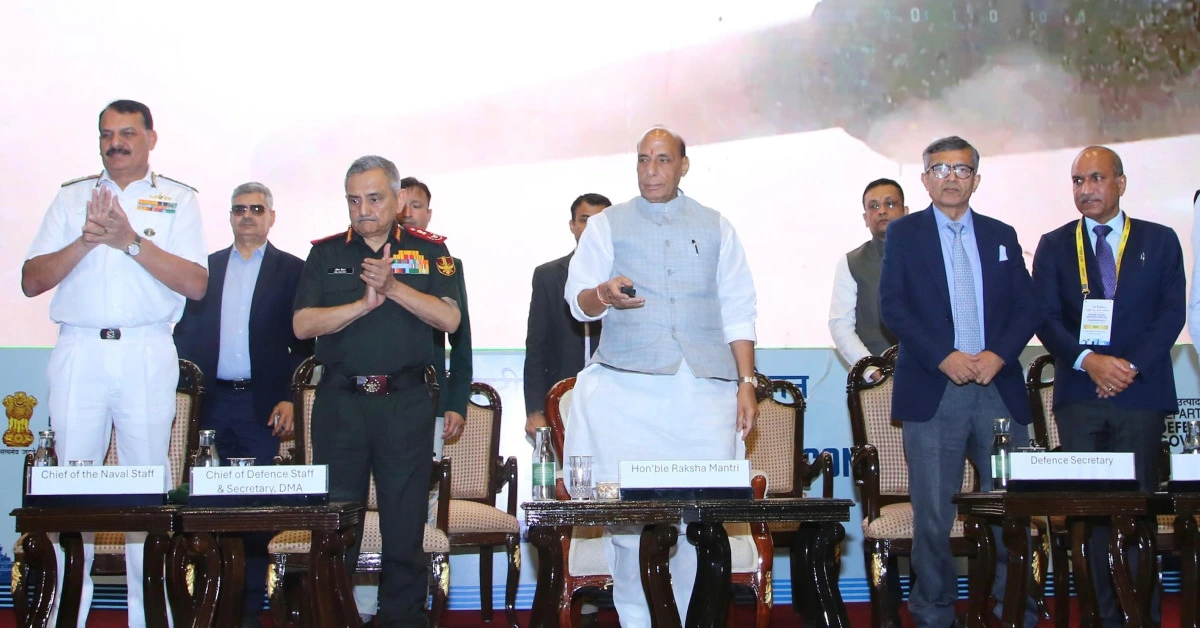
India must work in a mission mode to emerge as a global hub of indigenous drone manufacturing in the next few years, Defence Minister Rajnath Singh said on Thursday, 19 March, while addressing the National Defence Industries Conclave 2026 in New Delhi.
He stressed that building a domestic drone production ecosystem is essential to ensure strategic autonomy, enhance defence preparedness, and achieve self-reliance amid ongoing geopolitical uncertainties.
Citing global conflicts, including the Russia-Ukraine war and tensions in West Asia, the Singh said that drones and counter-drone technologies are set to play a pivotal role in future warfare.
He emphasised that self-reliance in drone manufacturing is essential not merely at the product level, but at the component level as well.
“From the drone’s molds to its software, engines, and batteries, everything must be manufactured in India. This is no easy task. In most countries where drones are manufactured, a significant number of critical components are currently imported from China,” he said.
Singh added that while the creation of any nation’s defence industrial ecosystem relies on the contributions of large industries, MSMEs, start-ups, and innovators, it is equally driven by a clear policy push from the government, tailored to meet the country’s specific defence requirements.
While he called for active contribution of the private sector, he extended Prime Minister Narendra Modi-led Government’s full support to transform India into a global hub for indigenous drone manufacturing.
During the conclave, the minister launched the 14th edition of Defence India Start-up Challenge (DISC-14) and the 4th edition of ADITI Challenges under the iDEX framework.
Read also : Keel laid for two next-generation Offshore Patrol Vessels to strengthen Indian Coast Guard capabilities
A total of 107 problem statements were unveiled, including 82 under DISC-14 and 25 under ADITI Challenges 4.0, covering requirements from the Armed Forces, Indian Coast Guard and Defence Space Agency.
In addition, 101 innovation challenges from Defence Public Sector Undertakings (DPSUs) were introduced to promote design-led innovation among MSMEs and start-ups.
These challenges will be supported through funding, mentorship and testing infrastructure.
The Defence Minister highlighted the progress of the iDEX initiative, stating that around 676 start-ups, MSMEs and innovators have joined the defence innovation ecosystem since 2018.
A total of 548 contracts have been signed and 566 challenges launched.
Of these, 58 prototypes worth ₹3,853 crore have received procurement clearance, while 45 procurement contracts valued at ₹2,326 crore have already been signed.
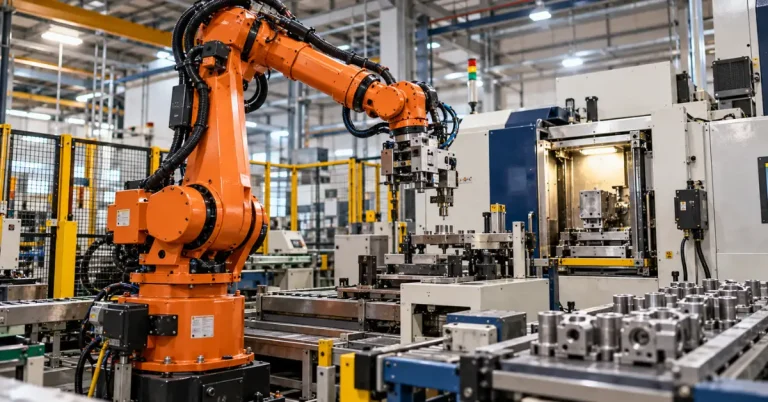
He noted that MSMEs are increasingly participating in areas such as artificial intelligence, robotics, automation and advanced manufacturing, and called for greater adoption of emerging technologies including digital twin systems and Industry 4.0 practices.
The Defence Minister also underlined the importance of horizontal and vertical integration among MSMEs to strengthen capabilities and build a robust defence innovation ecosystem.
Read also : ₹118 crore long-range free-space Quantum Key Distribution project in planning stage: Defence Ministry