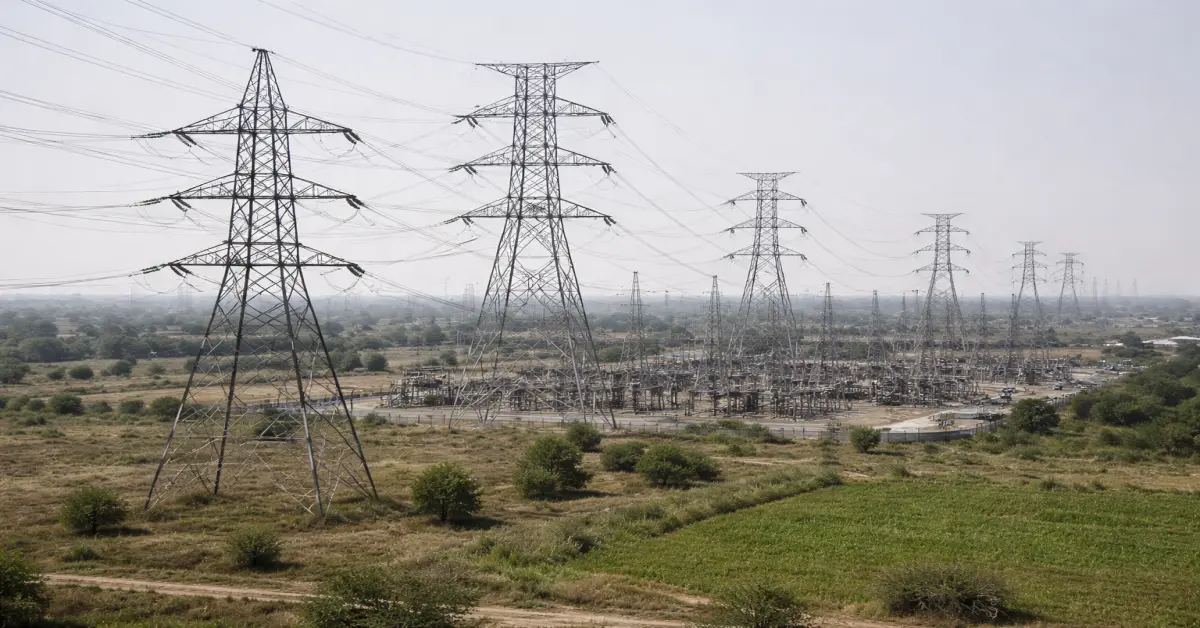
India’s power transmission network has crossed the landmark of 5 lakh circuit kilometres, reflecting a significant expansion of high-voltage infrastructure supporting electricity demand and renewable energy integration.
The national transmission system now comprises over 5,00,000 circuit kilometres of transmission lines at 220 kV and above, along with 1,407 GVA of transformation capacity at similar voltage levels. The milestone was achieved on 14 January 2026 following the commissioning of a 628 circuit kilometre, 765 kV transmission line connecting the Bhadla II and Sikar II substations in Rajasthan.
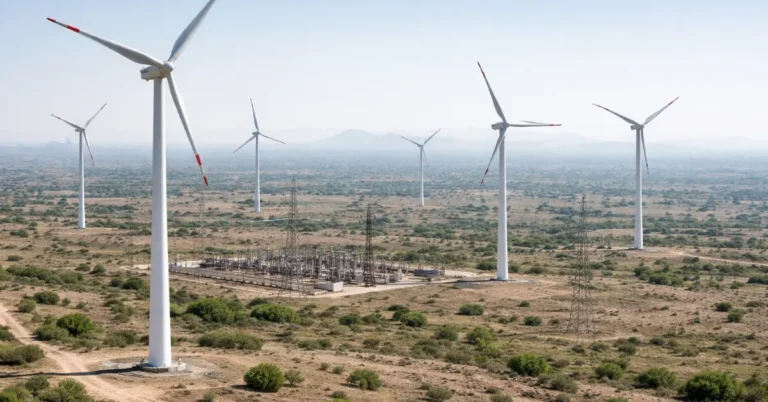
The newly commissioned line enables evacuation of an additional 1,100 MW of power from the Bhadla, Ramgarh, and Fatehgarh solar power complexes, strengthening grid connectivity for large-scale renewable energy generation in Rajasthan.
Since April 2014, India’s transmission network has expanded by 71.6 per cent, with the addition of 2.09 lakh circuit kilometres of high-voltage transmission lines. Over the same period, transformation capacity has increased by 876 GVA. Inter-regional power transfer capacity has reached 1,20,340 MW, enabling electricity to be transferred seamlessly across regions under the “One Nation – One Grid – One Frequency” framework.
Transmission infrastructure development remains ongoing. Inter-State Transmission System projects under implementation are expected to add approximately 40,000 circuit kilometres of transmission lines and 399 GVA of transformation capacity. In addition, Intra-State Transmission projects are projected to add around 27,500 circuit kilometres of transmission lines and 134 GVA of transformation capacity.
The expansion of transmission capacity is aligned with requirements for evacuating increasing non-fossil power generation, as India targets 500 GW of non-fossil installed capacity by 2030. The 5 lakh circuit kilometre milestone reflects sustained investment in grid infrastructure to support reliability, affordability, and large-scale renewable energy integration.