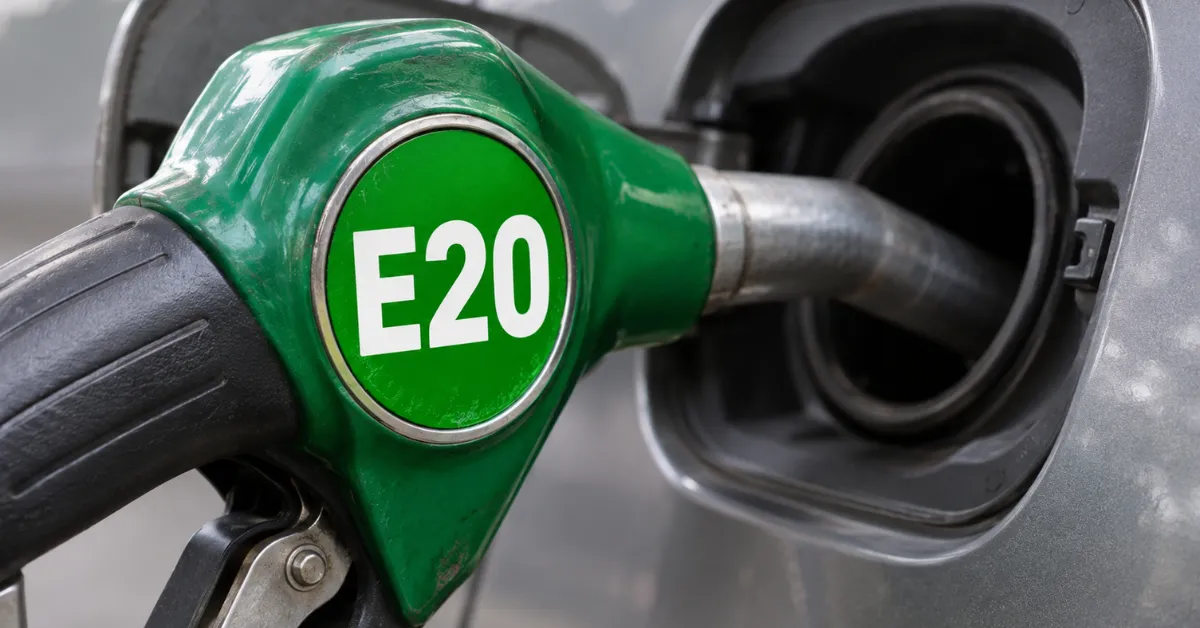
New Delhi, November 8: The Centre has challenged Karnataka’s findings of excessive ethanol blending in petrol, saying that all 893 fuel samples tested by public sector oil marketing companies across 27 states and Union Territories met the prescribed ethanol-content limits for E20 petrol.
The disagreement follows a report by the Karnataka government that petrol samples collected from certain retail outlets contained ethanol concentrations of approximately 26% to 31%, above the prescribed range for E20 fuel.
In a statement issued on November 7, the Ministry of Petroleum and Natural Gas said Indian Oil Corporation (IOCL), Bharat Petroleum Corporation (BPCL) and Hindustan Petroleum Corporation (HPCL) had questioned Karnataka’s sampling procedures and testing methods.
According to the ministry, the three companies tested 893 petrol samples for ethanol content under the Bureau of Indian Standards specification IS 17021. The results showed ethanol concentrations ranging from 19% to 21%, within the prescribed limits.
Indian Oil tested 330 samples, Bharat Petroleum tested 280 and Hindustan Petroleum tested 283.
In Karnataka, the oil companies tested 56 samples and reported ethanol concentrations between 19% and 20%, with an average of 19.30%.
However, these findings do not conclusively disprove Karnataka’s allegations because the state government and oil companies conducted separate sampling exercises. The available information does not establish that both sides tested petrol from the same outlets or batches.
Karnataka officials had reported collecting 63 petrol samples across seven districts, with some showing ethanol concentrations above 30%.
The oil marketing companies have disputed those results and requested detailed sampling records, outlet-wise laboratory reports and information about the testing methods used.
They have also sought access to counterpart samples for independent verification.
The ministry said fuel sampling must follow procedures prescribed under the Motor Spirit and High Speed Diesel Control Order, 2005, and the Marketing Discipline Guidelines, 2024.
These procedures require six one-litre samples to be collected, with two provided to the dealer, two retained by the oil company or relevant department and two sent to an authorised laboratory.
The oil companies also raised technical objections to Karnataka’s laboratory reports, including questions about the testing standards, sample preparation and reference materials.
However, those objections do not independently establish that Karnataka’s laboratory findings were incorrect.
The dispute has drawn attention to India’s E20 petrol programme, under which petrol is blended with approximately 20% ethanol.
The government promotes ethanol blending to reduce dependence on imported crude oil, support domestic ethanol production and strengthen energy security.
The ministry also addressed concerns about the impact of E20 petrol on vehicle mileage and maintenance costs.
Citing earlier technical assessments, it said vehicles calibrated for E20 could experience mileage reductions of approximately 1% to 2%, while certain other vehicles could see reductions of around 3% to 6%, depending on their specifications and calibration.
The ministry rejected the assumption that E20 causes a uniform 10% reduction in mileage across all vehicles.
It also questioned estimates of ₹62,000 crore in nationwide consumer losses from reduced mileage and ₹39,000 crore in vehicle repair costs, saying such claims required scientifically established evidence.
These responses do not mean that ethanol-blended petrol has no effect on fuel efficiency or maintenance. The impact can vary depending on the vehicle and its compatibility with the fuel.
The government also highlighted the economic and environmental benefits it attributes to the ethanol-blending programme.
According to the ministry, ethanol blending has generated foreign-exchange savings exceeding ₹1.97 lakh crore since the 2014–15 ethanol supply year.
During the same period, the programme has reportedly substituted approximately 316 lakh metric tonnes of crude oil, avoided around 952 lakh metric tonnes of carbon dioxide emissions and resulted in payments exceeding ₹1.66 lakh crore to farmers through the ethanol supply chain.
For the ethanol supply year ending October 31, 2026, public sector oil marketing companies reported procuring 1,089 crore litres of ethanol and blending 1,134 crore litres into petrol, against total petrol sales of approximately 5,673 crore litres.
These are government-reported programme figures and do not independently resolve the disagreement over Karnataka’s petrol samples.
For motorists, the immediate question is whether fuel sold at the outlets identified by Karnataka exceeded the prescribed ethanol limits.
While the Centre maintains that its monitoring results demonstrate compliance, Karnataka’s reported findings remain contested.
The dispute therefore remains unresolved. Further examination of the sampling records, laboratory methods and disputed fuel samples would be needed to establish whether excessive ethanol blending occurred at the outlets identified by the state.
Read also: Odisha’s Reservoirs Could Host 3,000 MW of Floating Solar Power as SECI, OHPC Plan Joint Venture
Read also: BHEL Wins Adani Power Contracts for 6,400 MW of Thermal Projects, Value May Hit ₹28,000 Crore