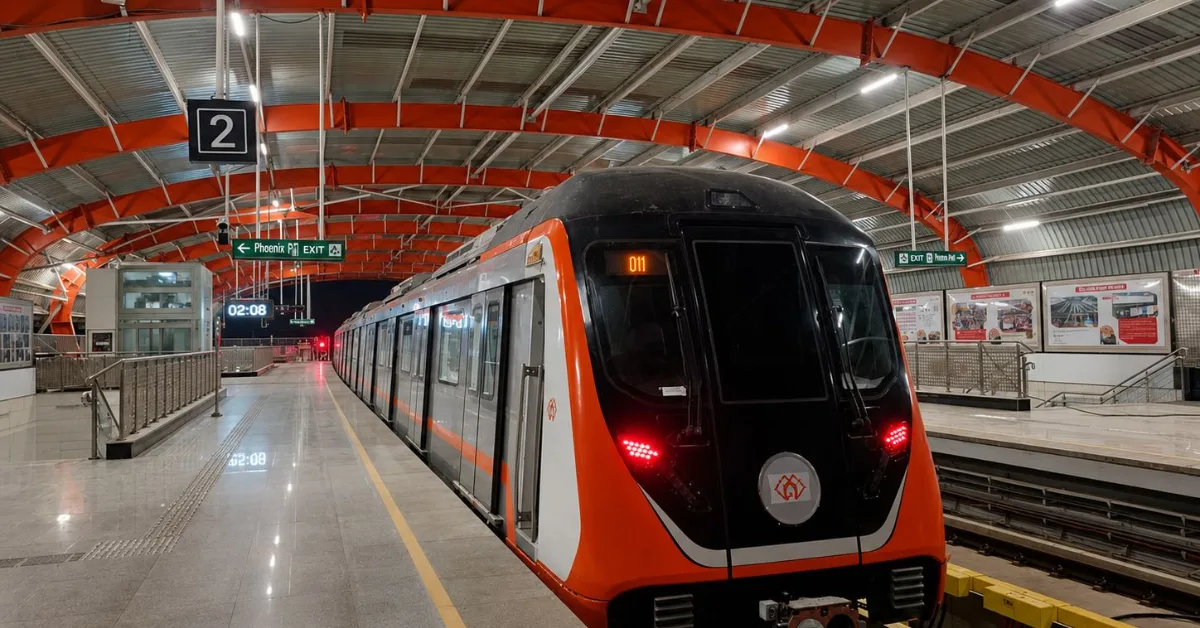
Kanpur Metro has completed a key collision test before the proposed extension of passenger services from KNP Central, also known as Kanpur Central, to Naubasta.
According to a statement by the Uttar Pradesh Metro Rail Corporation (UPMRC) on 26 May, the test was conducted to ensure world-class safety standards before opening the section for passenger movement.
During the test, two trains travelling at 80 Km/h automatically applied brakes at the specified distance without human intervention.
UPMRC said the braking response was achieved with the help of the advanced Communication Based Train Control (CBTC) signalling system.
“A collision test was conducted to ensure world-class safety standards before extending passenger services from KNP Central to Naubasta. Two trains traveling at 80 km/h automatically applied brakes without human intervention at the specified distance, with the aid of advanced CBTC Signaling,” the UPMRC said in the statement.
The test is significant because the KNP Central-Naubasta section forms the remaining part of Corridor-1, which runs from IIT Kanpur to Naubasta.
Passenger services are already operational on the IIT Kanpur-Kanpur Central stretch, and the Naubasta extension will take metro connectivity deeper into southern Kanpur.
The Corridor-1 alignment from IIT Kanpur to Naubasta has a total length of 23.785 Km and includes both elevated and underground sections.
The larger Kanpur Metro project comprises two corridors covering about 32.4 Km.
The section now being prepared for passenger service includes the onward stretch from Kanpur Central towards Naubasta.
The Kanpur Central-Naubasta stretch covers seven stations – Jhakarkati, Transport Nagar, Baradevi, Kidwai Nagar, Basant Vihar, Baudh Nagar and Naubasta.
The successful collision test comes after a series of system-level preparations on the corridor.
Trial runs had earlier been carried out on the Kanpur Central-Naubasta stretch, while work on track, third rail power supply, signalling and telecom systems has been moving through testing stages ahead of the proposed service extension.
The use of CBTC is central to the safety architecture of the corridor.
The system allows trains to communicate continuously with signalling equipment, helping regulate train movement, maintain safe separation and support automatic train operations.
Kanpur Metro trains are designed to operate at up to 80 Km/h in service.
The rolling stock and signalling package for the Kanpur and Agra metro projects includes India-made trainsets manufactured at Alstom’s Savli facility in Gujarat, along with an advanced signalling solution.
For passengers, the Naubasta extension is expected to improve access between the railway station area and densely used localities in southern Kanpur.
The extension will also strengthen Corridor-1 as a continuous north-south urban transport spine from IIT Kanpur to Naubasta once passenger operations are cleared.
Read also: Kolkata Metro Orange Line clears Chingrighata hurdle as 62-metre viaduct gap bridged