
India’s wholesale inflation accelerated sharply to 8.3% in April 2026, marking its highest level since October 2022, as rising global crude oil prices and fuel costs triggered broad-based pressure across the economy.
The latest Wholesale Price Index (WPI) print came in far above market expectations of 4.4%, according to a Reuters poll of economists, signalling a stronger-than-anticipated inflation shock at the producer level amid ongoing tensions in West Asia and volatility in global energy markets.
Data released by the Department for Promotion of Industry and Internal Trade on Thursday showed wholesale inflation more than doubling from 3.88% in March. The spike was led primarily by fuel, crude petroleum, natural gas and manufacturing-linked commodities.
The sharpest jump came from the Fuel and Power category, where inflation surged to 24.71% in April from 1.05% in March. Petrol inflation stood at 32.40%, while high-speed diesel inflation rose to 25.19%.
Crude petroleum inflation climbed to 88.06%, reflecting the impact of the recent oil rally on India’s import-heavy energy basket. Crude petroleum and natural gas together recorded inflation of 67.18%.
The latest numbers suggest that global energy prices are beginning to feed deeper into India’s industrial economy. Manufacturing inflation rose to 4.62% in April from 3.39% in March, with sectors such as basic metals, chemicals, textiles and machinery recording higher input costs.
Read also : India’s Public Sector Banks post all-time high net profit of ₹1.98 lakh crore in FY 2025-26
Basic metals inflation accelerated to 7%, while chemicals and chemical products inflation rose to 5.09%. Textile inflation also climbed to 7.30%, indicating widening cost pressures beyond fuel-linked sectors.
The April data also highlights the growing divergence between wholesale and retail inflation in India. While WPI inflation surged to 8.3%, retail inflation based on the Consumer Price Index stood at 3.48% in April, suggesting that input-cost pressures have not yet fully passed through to consumers.
Economists say the gap may narrow in the coming months if elevated fuel and transportation costs continue to filter through supply chains.
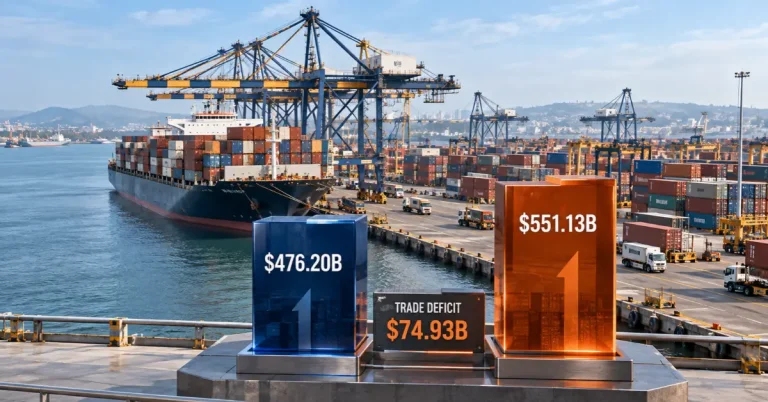
The inflation spike comes at a sensitive time for the Indian economy, with the rupee under pressure from rising oil-import costs and global market uncertainty. The Indian currency touched fresh record lows this week amid concerns over widening trade and energy import bills.
The latest inflation print is also likely to complicate the Reserve Bank of India’s policy outlook. RBI Governor Sanjay Malhotra earlier this week said the central bank may need to respond if inflationary pressures deepen further due to external shocks and commodity volatility.
Food inflation, however, remained relatively moderate compared with energy-linked categories. The WPI Food Index rose to 2.31% in April from 1.85% in March. Onion and potato prices continued to remain in deflation territory, while milk, edible oils and protein-linked items such as eggs, meat and fish recorded higher inflation.
The wholesale inflation data strengthens concerns that imported energy costs are once again becoming a major inflation driver for India, particularly as geopolitical tensions continue to affect global crude supply and shipping routes.
Read also : India and Canada conclude second round of Free Trade Agreement negotiations