India’s non-fossil fuel-based power generation capacity reached 288,035 MW as of 30 April 2026, accounting for 53.61 per cent of the country’s total installed power capacity, according to data released by the Central Electricity Authority.
The country’s total installed capacity stood at 537,264 MW at the end of April 2026. Fossil fuel-based capacity accounted for 249,229 MW, or 46.39 per cent of the total.
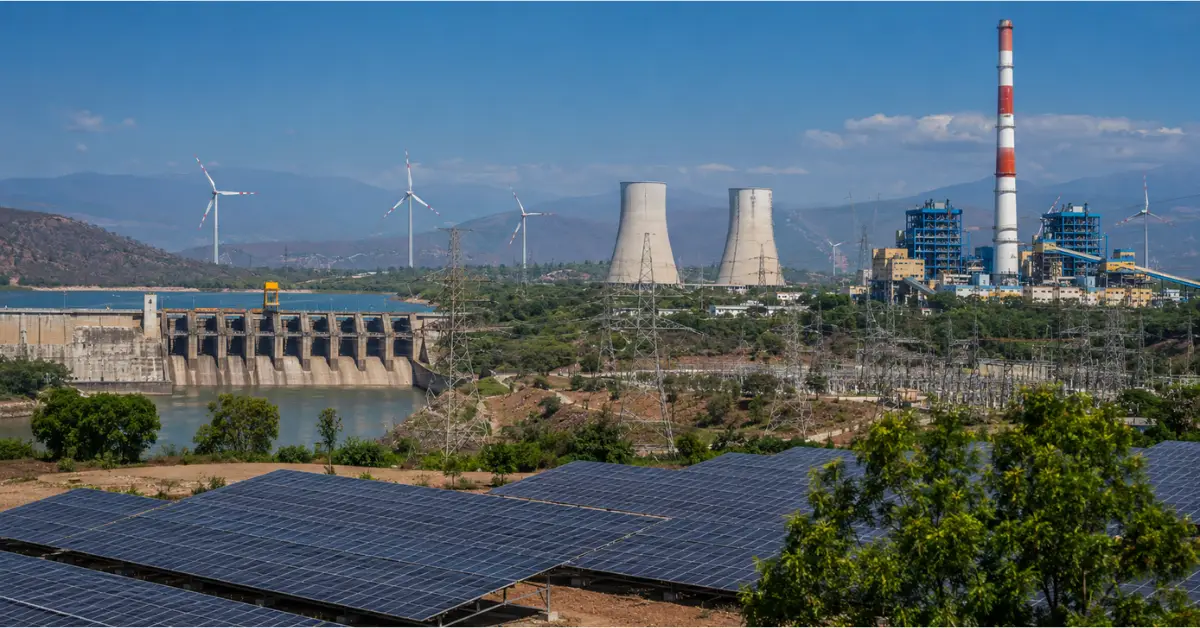
Renewable energy sources, including hydro, formed the largest broad category in India’s installed capacity mix, with 279,255 MW and a share of 51.98 per cent. This included 51,665 MW of hydro capacity, including pumped storage projects, and 227,591 MW from wind, solar and other renewable energy sources.
Solar power remained the biggest component within the renewable segment. India’s installed solar capacity stood at 154,236 MW, making up 28.71 per cent of the country’s total installed power capacity.
Wind power capacity stood at 56,437 MW, accounting for 10.50 per cent of total installed capacity. Bio-mass power capacity was 10,869 MW, waste-to-energy capacity stood at 877 MW, and small hydro capacity was 5,171 MW.
Among fossil fuel sources, coal remained the single largest source of installed capacity. Coal-based capacity stood at 221,898 MW, accounting for 41.30 per cent of India’s total installed power capacity.
Gas-based capacity stood at 20,122 MW, lignite-based capacity at 6,620 MW, and diesel-based capacity at 589 MW. Nuclear power capacity stood at 8,780 MW, accounting for 1.63 per cent of total installed capacity.
Region-wise, the Western Region had the highest installed capacity at 184,693 MW, followed by the Northern Region with 156,658 MW and the Southern Region with 149,965 MW.
The Eastern Region had 39,607 MW of installed capacity, while the North-Eastern Region had 6,177 MW. The Islands had 164 MW of installed capacity.
The CEA report also recorded changes during April 2026. THDC’s Tehri pumped storage project Unit-4 of 250 MW was added with effect from 9 April 2026.
NTPC’s Dadri Unit-5 and Unit-6 were each uprated from 490 MW to 500 MW with effect from 7 April 2026.
The report also noted the retirement of TSGENCO’s Ramagundam-B thermal power station Unit-1 of 62.5 MW with effect from 7 April 2026. JKSPDC’s Pampore gas power station Unit-1 to Unit-7, with 25 MW each, was retired with effect from 28 April 2026.
According to the report, the net conventional capacity addition during April 2026 stood at 207.5 MW, while net renewable energy capacity addition stood at 4,317.16 MW. Overall net capacity addition during the month was 4,524.66 MW.
The data shows that India’s installed power mix has moved clearly towards non-fossil sources, with solar, wind, hydro and nuclear together accounting for a larger share than fossil fuel capacity as of April-end 2026.
Read also : CEL launches 200 MW solar module facility as India expands renewable manufacturing