India’s inflation is currently near the lower bound of the Reserve Bank of India’s tolerance band, and the impact of rising global crude oil prices on domestic inflation is not expected to be substantial at this stage, the government informed Parliament on Monday, 9 March.
In a written reply to Lok Sabha on the impact of rising global crude oil prices on inflation, Finance Minister Nirmala Sitharaman said that while crude prices have recently increased due to geopolitical tensions in West Asia, the immediate inflationary effect remains limited.
According to the statement laid in the Lok Sabha, the price of both global crude oil and the Indian basket had been on a declining trajectory over the past year until geopolitical clashes in West Asia began on 28 February.
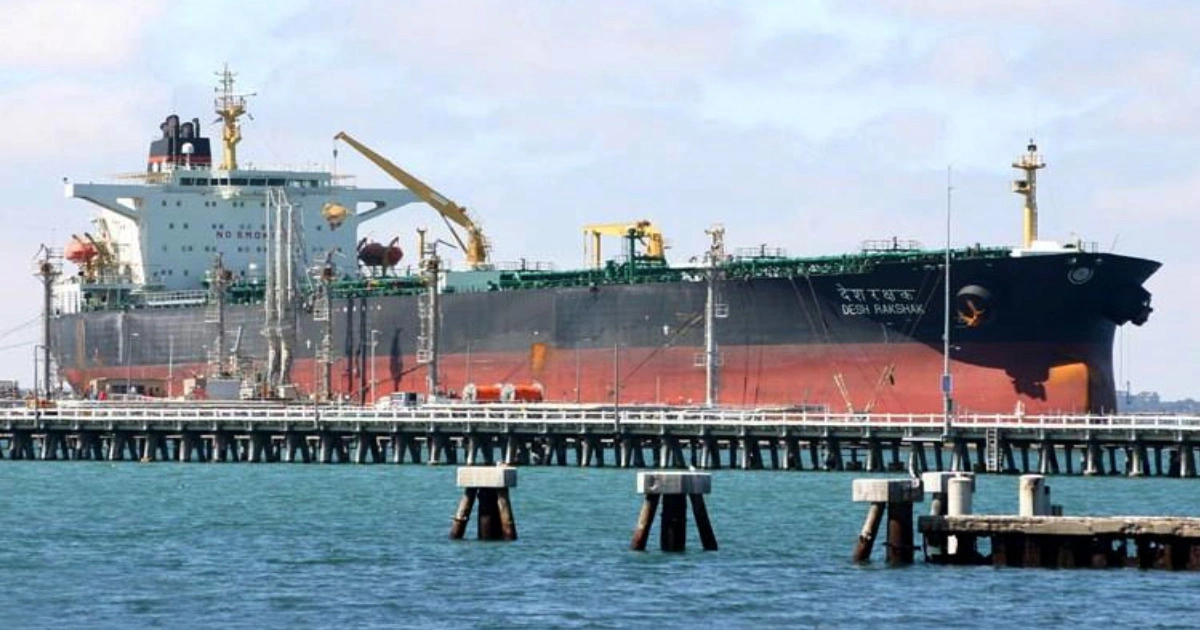
Between the end of February and 2 March 2026, the crude oil FOB price of the Indian Basket rose from $69.01 per barrel to $80.16 per barrel.
Despite the increase, the minister noted that the current inflation environment provides some buffer against price shocks.
“Given that India’s inflation is near the lower bound, the impact on inflation is not estimated to be substantial at this point,” the minister said.
The Finance Minister also cited the Reserve Bank of India’s Monetary Policy Report released in October 2025, which estimated that if crude oil prices were higher by 10 per cent than baseline assumptions, and assuming full pass-through to domestic prices, inflation could increase by around 30 basis points.
Read also : After NSE, Bombay Stock Exchange eyes expansion in Mumbai’s Bandra Kurla Complex
However, the medium-term impact of global crude oil prices on inflation depends on several factors, including exchange rate movements, global demand and supply conditions, monetary policy transmission, the state of general inflation, and the extent of indirect pass-through, the minister stated.
The minister also highlighted that retail inflation has moderated in recent years.
Average retail inflation measured by the Consumer Price Index declined from 5.4% in 2023-24 to 4.6% in 2024-25, and further to 1.8% during April–January of 2025-26.
Headline inflation for January 2026 stood at 2.75% and is close to the lower bound of the RBI’s inflation tolerance band of 4% ± 2%.
As part of inflation management, the Monetary Policy Committee has reduced the policy rate by 125 basis points cumulatively since February 2025, the minister said.
The minister said it has also undertaken a series of administrative and fiscal measures to control inflation and mitigate its impact on citizens.
According to the minister, these include augmentation of buffer stocks of essential food items, strategic sales of procured grains in the open market, facilitation of imports and export curbs during supply shortages, and implementation of stock limits to increase market supplies of select commodities.
Additional measures include subsidised retail sales of select food items under the Bharat brand, market intervention for perishable horticultural and agricultural commodities, reduction in fuel taxes, creation of scientific storage capacity, and measures to increase disposable income through income tax relief and GST rationalisation.