India’s total installed electricity generation capacity stood at 5,13,730 MW as of 31 December 2025, with non-fossil fuel sources accounting for 51.93% of the total, overtaking fossil fuel-based capacity at 48.07%, according to official data presented in the Lok Sabha.
Fossil fuel sources together contributed 2,46,942 MW to the national power mix, while non-fossil fuel sources accounted for 2,66,788 MW, underscoring the steady expansion of clean energy in India’s power sector.
“As on 31.12.2025, the country’s total installed generation capacity has reached 5,13,730 MW, comprising of 2,46,942 MW of fossil-fuel sources and 2,66,788 MW of non-fossil fuel sources,” Minister of State in the Ministry of Power Shripad Naik said in a written reply to a question in the Lok Sabha earlier this week.
According to the data presented by the minister in the reply, Coal remained the dominant source, with an installed capacity of 2,19,610 MW, accounting for 42.75% of total capacity.
Read also : India Energy Week 2026 Commences With Call For Balanced Investment Across Conventional And Clean Energy
This was followed by gas-based power at 20,122 MW (3.92%), lignite at 6,620 MW (1.29%) and diesel-based generation at 589 MW (0.11%).
Renewable energy sources, including large hydro, contributed 2,58,008 MW, while nuclear power added 8,780 MW, representing 1.71% of total installed capacity.
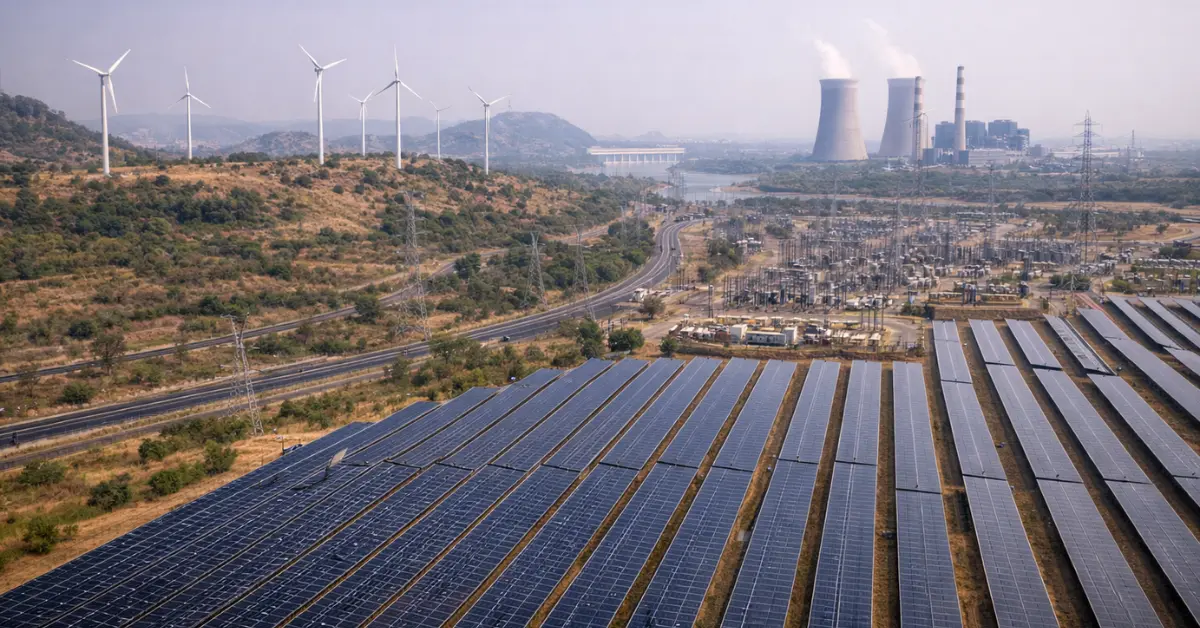
Within the renewable segment, solar power emerged as the largest contributor, with an installed capacity of 1,35,810 MW, accounting for 26.44% of the national power mix.
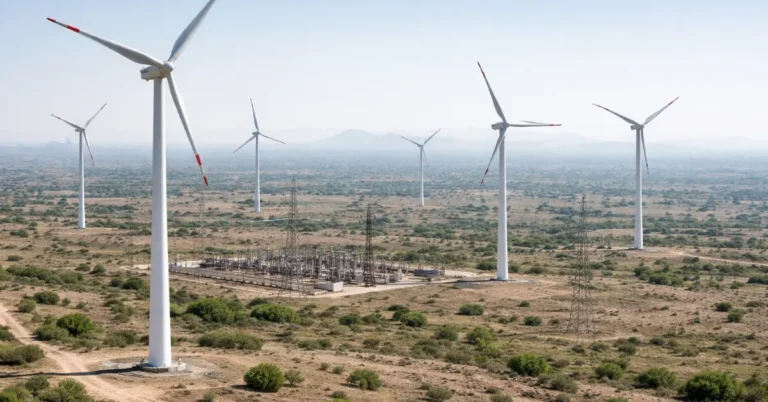
Wind power followed at 54,511 MW (10.61%), while hydropower, including pumped storage projects, stood at 50,915 MW (9.91%).
Small hydro projects contributed 5,159 MW (1.00%), biomass and cogeneration plants added 10,757 MW (2.09%), and waste-to-energy projects accounted for 857 MW (0.17%).
The minister noted that India achieved the milestone of 50% of installed electricity capacity from non-fossil fuel sources in June 2025, more than five years ahead of its Nationally Determined Contribution target of 2030 under the Paris Agreement.
This shift is seen as a key pillar of India’s long-term strategy to transition towards Net Zero emissions by 2070.
To support this transition, the Centre has undertaken multiple policy and infrastructure measures, including large-scale renewable energy bidding programmes, waiver of inter-state transmission charges for select renewable projects, expansion of green energy corridors, promotion of battery energy storage systems and pumped storage projects, and incentives for domestic manufacturing of solar photovoltaic modules.
Read also : India To Host Its Biggest Global Energy Conclave As India Energy Week 2026 Opens In Goa Next Week