Researchers at the International Advanced Research Centre for Powder Metallurgy and New Materials (ARCI) have developed a cost-effective thermal energy storage material that can improve the efficiency of thermal batteries used in concentrated solar power plants and industrial waste heat recovery systems, according to a statement by the Ministry of Science and Technology on Thursday, 22 May.
ARCI is an autonomous institution of the Department of Science and Technology (DST).
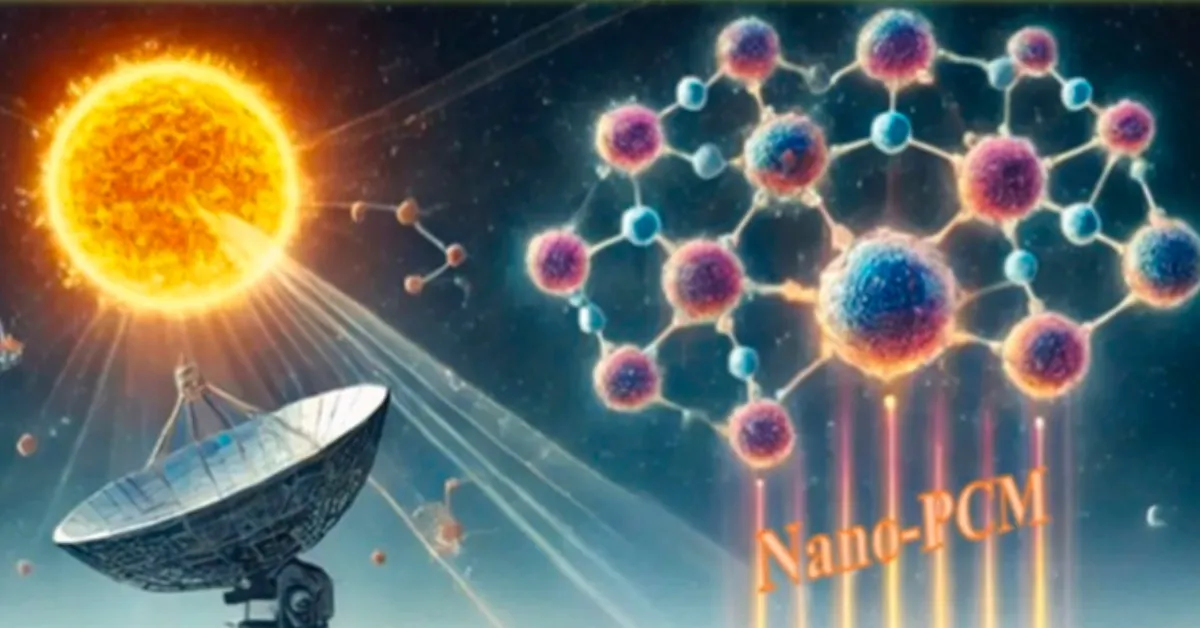
The research team, led by Dr Mani Karthik, developed a scalable process to produce spinel nanocomposite Phase Change Material (PCM) for thermal energy storage applications.
The development is aimed at improving thermal energy storage systems, which are important for the efficient use of concentrated solar power and for capturing industrial waste heat.
The ARCI team used a simple co-precipitation method to produce spinel-type metal oxide nanoparticles with controlled particle size.
The nanomaterials showed thermal stability and uniform dispersion, making them suitable for high-performance nanocomposite PCM.
According to the statement, adding only 1% spinel oxide nanoparticles to the PCM led to an increase of up to 45% in specific heat capacity when compared with PCM without nanocomposites.
Specific heat capacity refers to the ability of a material to store thermal energy. The higher capacity means the material can store more heat per unit mass, improving energy storage efficiency.
Read also: India’s peak power demand hits record 265.44 GW, third consecutive day of new highs
The ministry said that when the nanoparticles are well dispersed in the PCM, they improve thermal properties by increasing the specific surface area.
This helps form a stable spinel oxide layer at the interface, increasing surface energy and improving the material’s heat storage capacity.
The improved material can help reduce the size of storage tanks and lower the use of construction materials. This can bring down both capital and operational costs for thermal energy storage systems.
The development offers a compact and cost-effective solution for thermal energy storage and could support next-generation materials with better performance.
The research has been published in Materials Today Chemistry by Elsevier.
The ministry said the work aligns with India’s clean energy objectives and the Aatma Nirbhar Bharat initiative by advancing indigenous expertise in next-generation energy storage materials.