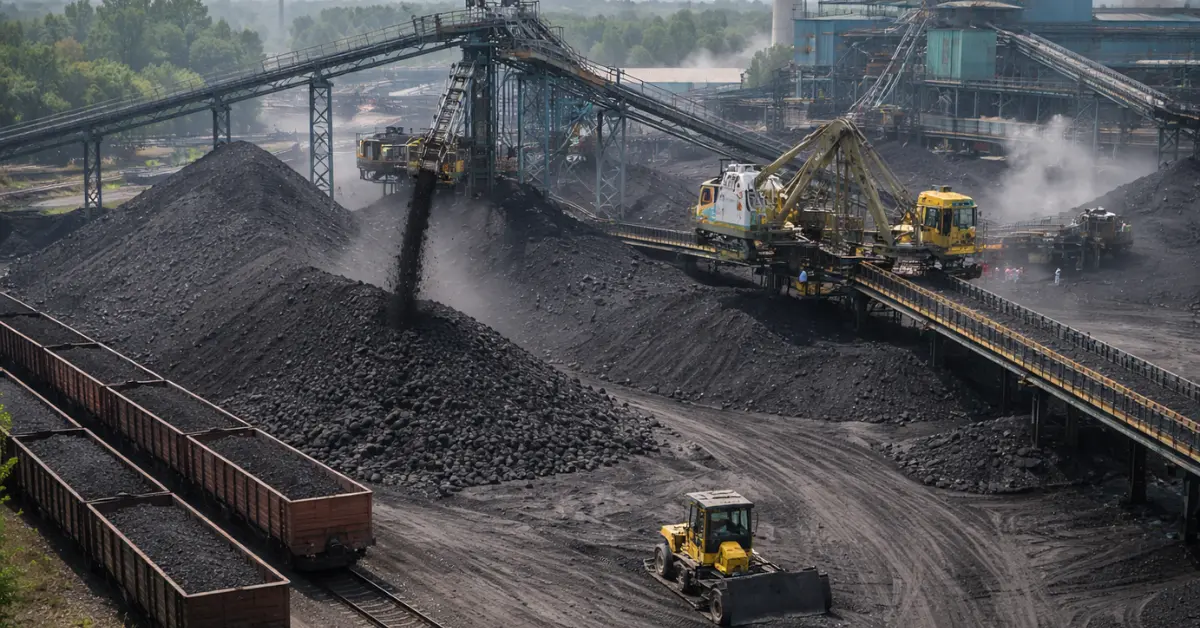
India has formally designated coking coal as a critical and strategic mineral under the Mines and Minerals (Development and Regulation) Act, 1957, a move aimed at addressing the country’s growing dependence on imports for its steel sector.
The notification, issued by the Ministry of Coal on 29 January 2026, follows recommendations from a high-level committee tasked with implementing long-term national development goals, along with policy inputs from NITI Aayog. The decision recognises the strategic importance of coking coal in domestic steel production and mineral security.
India is estimated to hold around 37.37 billion tonnes of coking coal resources, primarily in Jharkhand, with additional reserves in Madhya Pradesh, West Bengal, and Chhattisgarh. Despite this, import dependence has continued to rise. Imports increased from 51.20 million tonnes in 2020-21 to 57.58 million tonnes in 2024-25, with nearly 95 per cent of the steel sector’s coking coal requirement currently met through overseas supplies.
To operationalise the change, the Centre has amended the First Schedule of the MMDR Act. The term “Coal” has been expanded to explicitly include coking coal, while coking coal has also been added to the list of critical and strategic minerals. This classification allows for a separate regulatory treatment compared to ordinary minerals.
Under existing provisions of the Act, mining of critical minerals is exempt from public consultation requirements and allows the use of degraded forest land for compensatory afforestation. These provisions are expected to speed up approvals and encourage private investment, particularly in exploration and mining of deeper deposits.
The government has clarified that revenues from royalties, auction premiums, and other statutory payments will continue to accrue to state governments, even when mineral auctions are conducted by the Centre, as provided under Section 11D of the MMDR Act.
The reclassification is expected to have implications for supply-chain resilience in the steel sector, which remains vulnerable to global price volatility and geopolitical disruptions affecting coal exports. Industry analysts note that the effectiveness of the move will depend on how quickly domestic exploration and mining capacity can be scaled up to substitute imports in a cost-competitive manner.
Read also : Indian scientists develop high-voltage graphene supercapacitor promising faster EV acceleration and higher energy storage