India is on the verge of concluding a landmark free trade agreement (FTA) with Chile that could significantly transform the country’s access to critical minerals, Commerce and Industry Minister Piyush Goyal announced this week.
Speaking at the Institute of Chartered Accountants of India in Greater Noida, Goyal said negotiations on the proposed India-Chile FTA are nearing completion and the pact – planned as a Comprehensive Economic Partnership Agreement (CEPA) – will expand on the existing preferential trade agreement from 2006 by opening up access to strategic minerals.
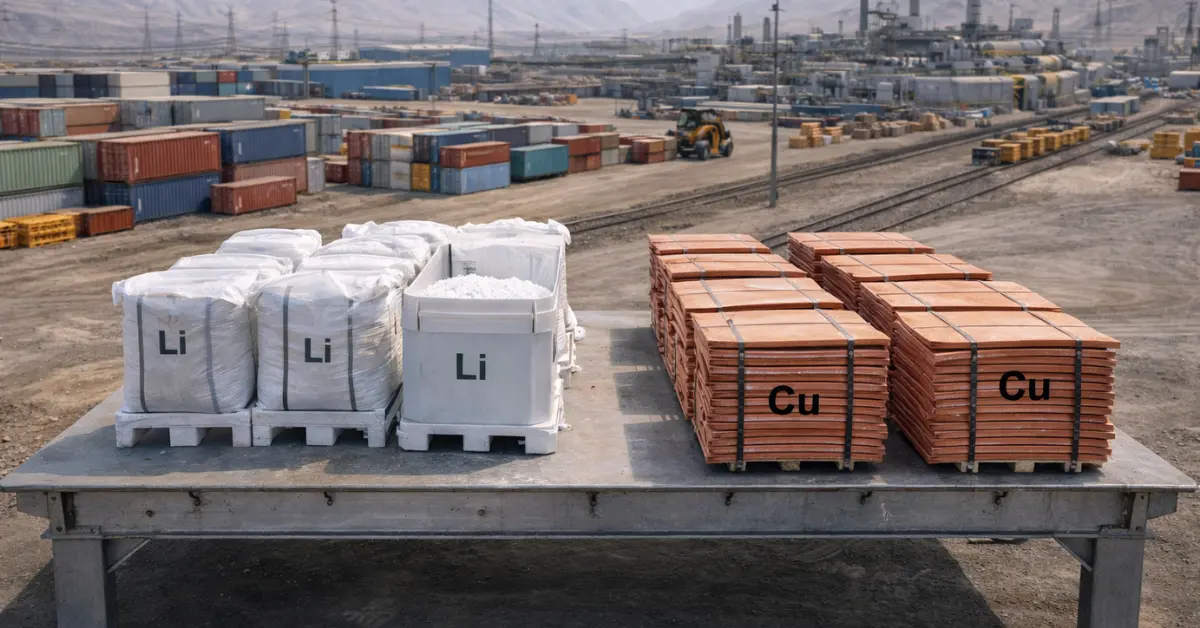
Chile is rich in lithium, copper, rhenium, molybdenum, and cobalt, resources that are essential for modern industries including electronics manufacturing, electric vehicles and renewable energy technologies such as solar and battery storage.
Critical minerals are indispensable for India’s ambitions in clean energy, digital infrastructure and advanced manufacturing.
With global competition for rare earths and battery-grade metals intensifying, securing stable and cost-effective supplies is viewed as crucial for reducing dependence on single-source imports and strengthening supply chains.
Analysts note that such resources underlie efforts to build electric vehicle ecosystems and scale up solar power deployment – core elements of India’s climate and industrial strategies.
The Chile pact comes at a time when India’s trade diplomacy has gained momentum.
In the past four years, the government has finalised eight free trade agreements with major partners and blocs including the European Union, the United Kingdom, the European Free Trade Association (EFTA), New Zealand, the United Arab Emirates, Australia, Oman and Mauritius.
These deals collectively broaden market access for Indian goods and services, strengthen foreign direct investment flows, and integrate Indian businesses into global value chains.
For India, deepening economic ties with Chile not only diversifies trade beyond traditional partners but also aligns with strategic goals of technological self-reliance and energy security.
As global demand for critical minerals soars, securing dependable sources through trade partnerships is emerging as a key pillar of India’s long-term economic competitiveness.
Read also : India rationalises regulatory framework to accelerate setting up of common effluent treatment plants