India’s efforts to build domestic capabilities in advanced semiconductor technologies received a push with the launch of two indigenously developed silicon photonics solutions in Chennai, aimed at enabling chip design and testing within the country.
Ministry of Electronics and IT (MeitY) Secretary S. Krishnan launched a Silicon Photonics Process Design Kit (PDK) and a Universal Programmable Photonic Integrated Circuit (PPIC) Test Engine, both developed at the Centre for Programmable Photonic Integrated Circuits and Systems (CoE-CPPICS) at IIT Madras.
The PDK includes over 50 verified components, providing a ready library for industries, startups, academic institutions, and defence organisations to design photonic integrated circuits domestically.
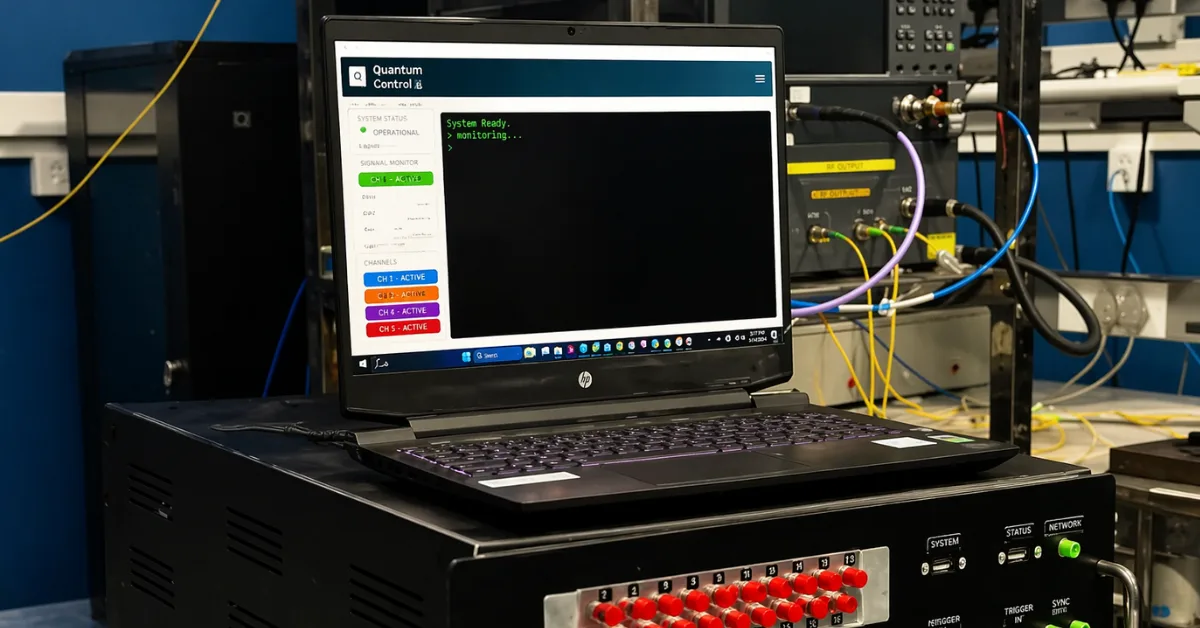
The PPIC Test Engine is a state-of-the-art automated characterisation platform for photonic and optoelectronic modules for variety of applications.
Read also: India’s textile exports grow 2.1% in FY26 to ₹3.16 lakh crore, garments remain top driver
According to a statement by the MeitY, this is a major milestone in Silicon Photonics technology sovereignty for India and will serve as a shared national facility for the Indian photonics R&D community.
Officials indicated that the technology has applications across both classical and quantum domains and could be supported under the upcoming India Semiconductor Mission (ISM) 2.0 for further development and commercialisation.
The next phase of the programme is expected to enable multi-project wafer fabrication runs starting in the third quarter of the current financial year, alongside integrated testing, packaging, and module characterisation capabilities.
The initiative follows a Product Research, Development and Manufacturing model, with international foundry support from SilTerra Malaysia and packaging collaboration with izmo Microsystems, Bengaluru.
The move reflects a broader push to expand domestic semiconductor capabilities into photonics, a segment increasingly relevant for high-speed data transmission, communication systems, and emerging quantum technologies.