New Delhi, October 9: The Goods and Services Tax (GST) Council has recommended removing arrest powers under GST law, raising the prosecution threshold from ₹1 crore to ₹5 crore and reducing penalties as part of a wider overhaul of tax administration. The proposals also aim to speed up refunds, simplify registration and ease compliance requirements for businesses.
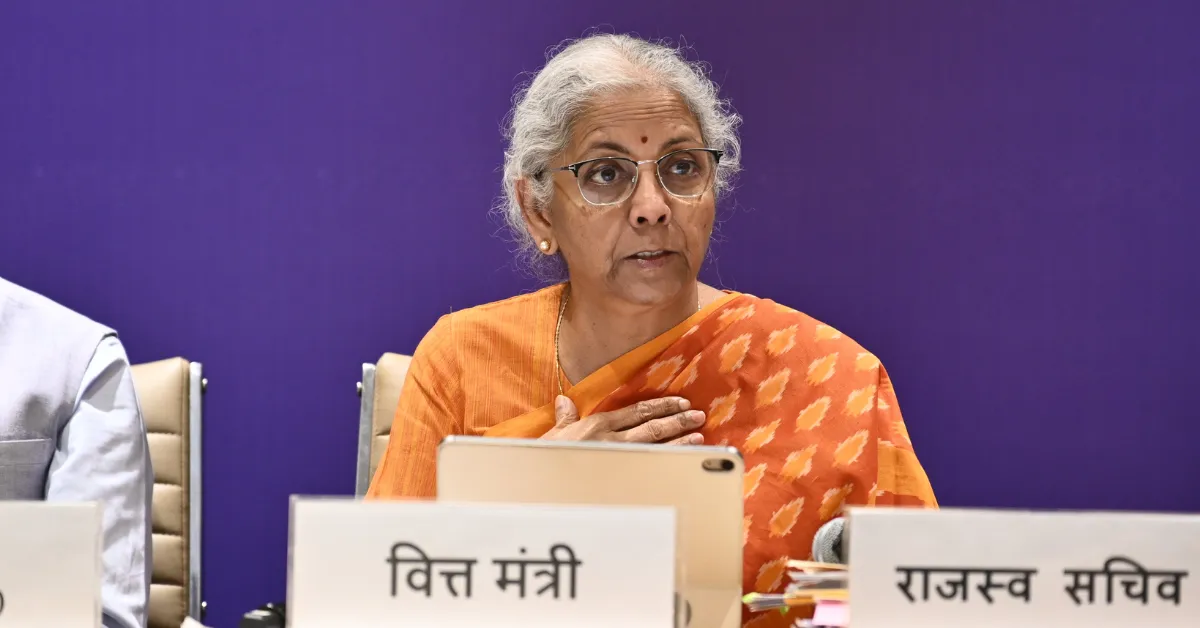
The recommendations were made at the Council’s 57th meeting in New Delhi on October 8, chaired by Union Finance Minister Nirmala Sitharaman. The proposed changes focus largely on how GST is administered and enforced, rather than on tax rates. They will take effect only after the necessary legal amendments are made or the relevant rules and notifications are issued.
Among the most consequential proposals is the complete withdrawal of arrest powers under GST through the removal of Section 69 of the Central Goods and Services Tax (CGST) Act, 2017. The Council also recommended increasing the monetary threshold for prosecution fivefold to ₹5 crore and narrowing certain provisions relating to tax offences, while retaining penalties and prosecution for specified violations.
The Council proposed reducing the maximum general penalty under Section 125 of the CGST Act from ₹25,000 to ₹10,000. It also recommended that tax authorities should not issue show-cause notices under specified provisions where the total tax involved is less than ₹10,000. The threshold would cover the combined amount of central, state and integrated GST, along with cess.
In non-fraud cases, the Council recommended a reduced penalty of 5% if taxpayers pay the outstanding tax and interest within 30 days of an order under Section 73 or within 60 days under Section 74A. The proposals are intended to reduce the burden of tax proceedings and disputes, particularly in cases involving smaller amounts.
Businesses could also benefit from faster GST refunds under a proposed automated system. The Council recommended that claims for excess balances in electronic cash ledgers be sanctioned automatically, without intervention by tax officers. For eligible claims involving zero-rated supplies, such as exports, and cases where taxes paid on inputs exceed those on final supplies, the system would provisionally sanction 90% of the amount claimed, subject to risk assessment.
The time allowed for acknowledging refund applications or issuing notices about deficiencies would be reduced from 15 days to 10 days. If neither is issued within that period, the application would be treated as acknowledged by the system. A second phase of reforms would introduce further automation for eligible refund claims, including full refunds for zero-rated supplies after adjusting any pending dues.
The Council also recommended expanding eligibility for input tax credit (ITC), which allows businesses to offset GST paid on eligible purchases against their tax liability. It proposed removing restrictions on credits relating to outdoor catering, health and life insurance, telecommunications towers, pipelines outside factory premises, free samples and certain goods destroyed or written off after their expiry.
Another proposal would allow refunds of accumulated input tax credit on input services in cases involving an inverted duty structure, where the tax rate on business inputs is higher than that on the final supply. The Council recommended making this facility available for eligible credits availed on or after November 1, 2026.
Refunds of eligible input tax credit on capital goods, including machinery and equipment, were also proposed for zero-rated supplies and inverted-duty cases. These would apply to credits availed on or after April 1, 2027, with the refund amount spread over 60 months.
Small businesses selling through online marketplaces could see simpler registration requirements. The Council recommended allowing eligible sellers to register in states where they have no physical presence by declaring a warehouse operated by an e-commerce platform as their principal place of business. The proposed facility would cover sellers intending to pass on input tax credit of not more than ₹2.5 lakh per month, excluding specified stock transfers. Registration would be automatic, subject to prescribed conditions.
The Council also gave in-principle approval to an optional Annual Return Quarterly Payment scheme for businesses with aggregate turnover of up to ₹5 crore in the preceding financial year that sell exclusively to unregistered customers. The proposed arrangement would allow eligible businesses to file an annual return while making quarterly tax payments. The detailed framework has yet to be finalised.
Changes have also been recommended to reduce unnecessary inspections of goods moving between states. Under the proposed framework, vehicles carrying goods could generally be intercepted only on the basis of specific intelligence and with authorisation from an officer not below the rank of Joint Commissioner. Inspections involving detention or seizure would ordinarily be restricted to states where the supplier or recipient is located or registered, rather than states through which the goods are merely passing.
However, the restrictions would not prevent action where goods are transported without a required e-way bill or documents establishing their origin or destination. In such cases, inspection, detention or seizure could take place regardless of jurisdiction.
Other recommendations include simplifying amendments to and cancellations of GST registrations, introducing clearer standards for notices and proceedings, and allowing taxpayers to challenge the blocking of amounts in their electronic credit ledgers by filing an objection and receiving a personal hearing.
The Council also proposed changes to facilitate exports of services, including removing certain restrictions affecting supplies made through overseas offices or branches of Indian service providers. Additional measures seek to reduce mismatches between tax returns and input tax credit records, with a revised return mechanism proposed for April 2027, following stakeholder consultation.
While the previous GST Council meeting in 2025 concentrated on rationalising tax rates, the latest proposals focus on enforcement, refunds, registration and compliance procedures.
The Finance Ministry clarified that the Council’s recommendations do not themselves have the force of law. The proposed changes will become legally effective only through the relevant amendments, notifications or circulars.
Read also: RBI raises repo rate to 5.5% in first hike in nearly four years as inflation pressures return