The Delhi Metro Rail Corporation (DMRC) is actively deploying Artificial Intelligence (AI) across its network to enhance operational efficiency, passenger safety, security and overall service quality.
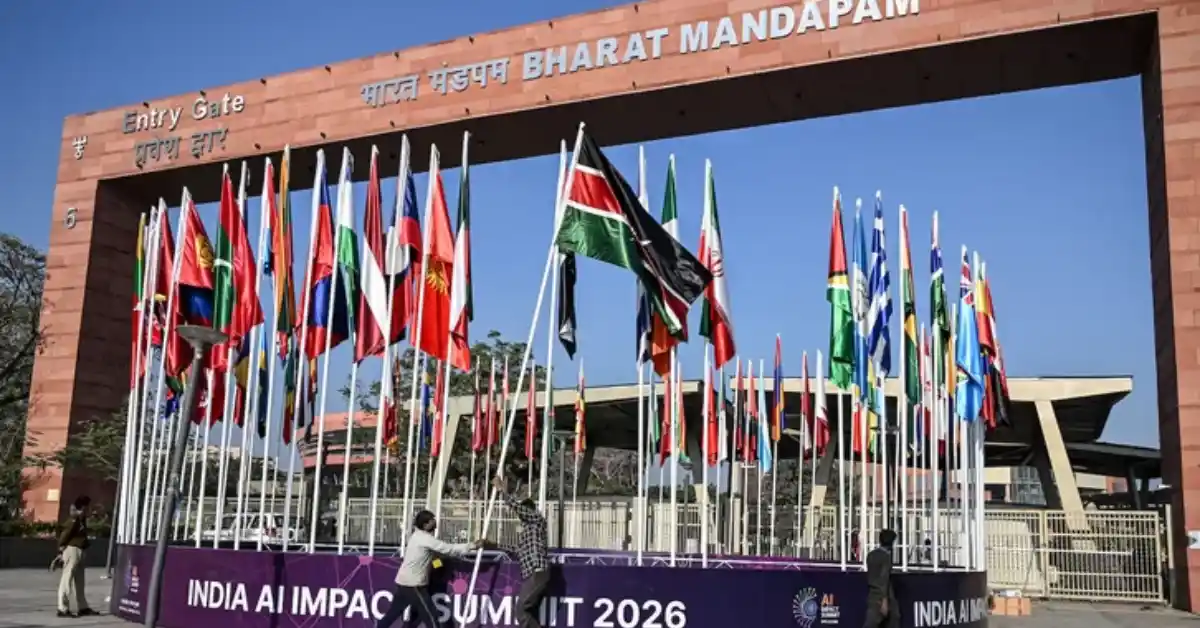
These AI-driven initiatives are being showcased at the ongoing AI Impact Summit at Bharat Mandapam. Union Minister for Housing & Urban Affairs and Power, Manohar Lal, visited DMRC’s stall at the summit and appreciated the steps taken towards AI implementation.
Ask CHETNA: conversational agentic AI for passengers
DMRC has launched CHETNA (Chatbot for Efficient Travel & Navigation Assistance), built on a BharatGPT-powered Agentic AI stack with a Sovereign AI architecture. The India-hosted system enables secure and intelligent metro passenger services.
The chatbot provides interactive journey planning, fare details, real-time service updates and ticket booking options across web and mobile platforms, aiming to simplify travel for commuters.
AI-enabled complaint management system
As part of its digital modernisation efforts, DMRC has introduced a state-of-the-art Complaint Management System, which is being upgraded to an Agentic AI-based platform.
In Phase 1, AI-enabled automation of written complaints is being implemented to reduce Average Handling Time (AHT) and improve workflow transparency.
Phase 2 will introduce an AI-powered Voice Bot on Helpline 155370 for real-time intent recognition and automated complaint registration, with provision for seamless human escalation in complex cases.
Read also : Delhi’s air quality improves for three consecutive days, GRAP Stage-II curbs lifted across NCR
AI monitoring of overhead wire network
DMRC has deployed advanced AI-based systems to monitor the health of its Overhead Equipment (OHE) network.
An Overhead Wire System Health Monitoring solution using the Pantograph Collision Detection System (PCDS) has been installed on:
- Red Line (Line 1)
- Yellow Line (Line 2)
- Blue Line (Line 3/4)
The system uses accelerometers and drop-off sensors mounted on train pantographs to continuously monitor contact between the moving pantograph and stationary overhead wire, helping identify wire alignment issues and hard points.
Additionally, AI-based video monitoring has been introduced on:
- Pink Line (Line 7)
- Magenta Line (Line 8)
This system analyses video footage captured from trains using AI image analytics to detect and classify anomalies in the overhead wire network.
Strengthening train and track safety
On the Pink Line (Line 7), DMRC has deployed an Automatic Wheel Profile Monitoring System that uses high-precision laser sensors to scan wheel profiles while trains are in motion.
To further enhance safety, an Automatic Axle Bearing Temperature Monitoring System has been introduced on:
- Pink Line (Line 7)
- Magenta Line (Line 8)
These systems help in early detection of potential faults, thereby improving operational reliability.
Predictive maintenance for track circuits
DMRC has introduced an AI-based predictive maintenance system for track circuits on:
- Green Line (Line 5)
- Violet Line (Line 6)
The system is designed to reduce train delays, minimise emergency on-track interventions, optimise manpower deployment and enhance overall service reliability.
Future roadmap
DMRC stated that more cutting-edge AI technologies are expected to be deployed in the coming days. The corporation is also working on strengthening its AI capabilities through collaborations with domain experts and workforce training modules.
With these initiatives, DMRC is positioning itself at the forefront of AI adoption in urban mass transit, integrating intelligent systems to deliver safer, smoother and more efficient metro operations.
Read also : Delhi-NCR construction projects to face stricter dust compliance from April 2026