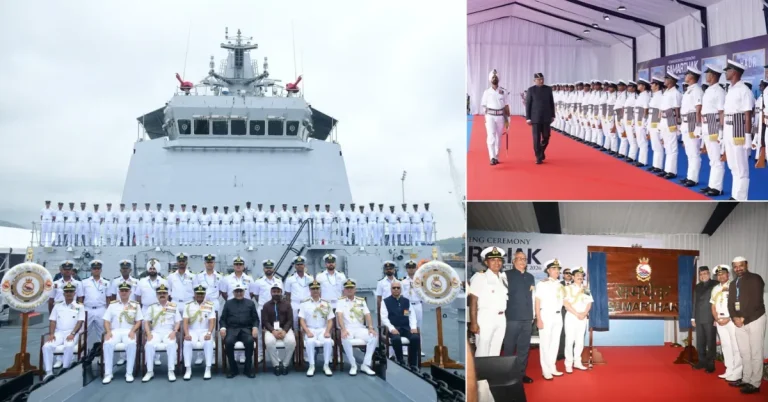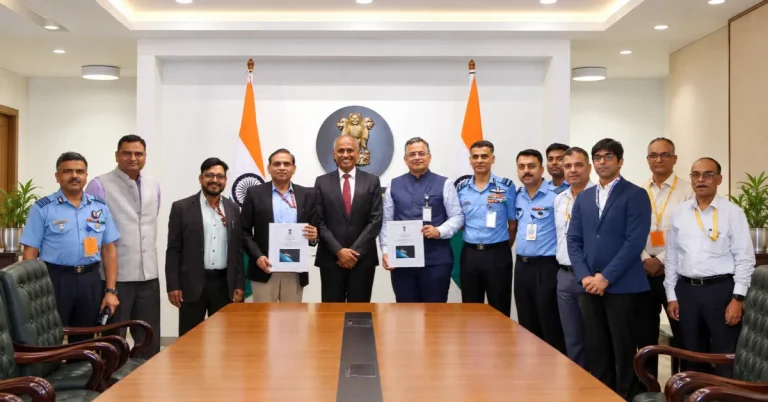
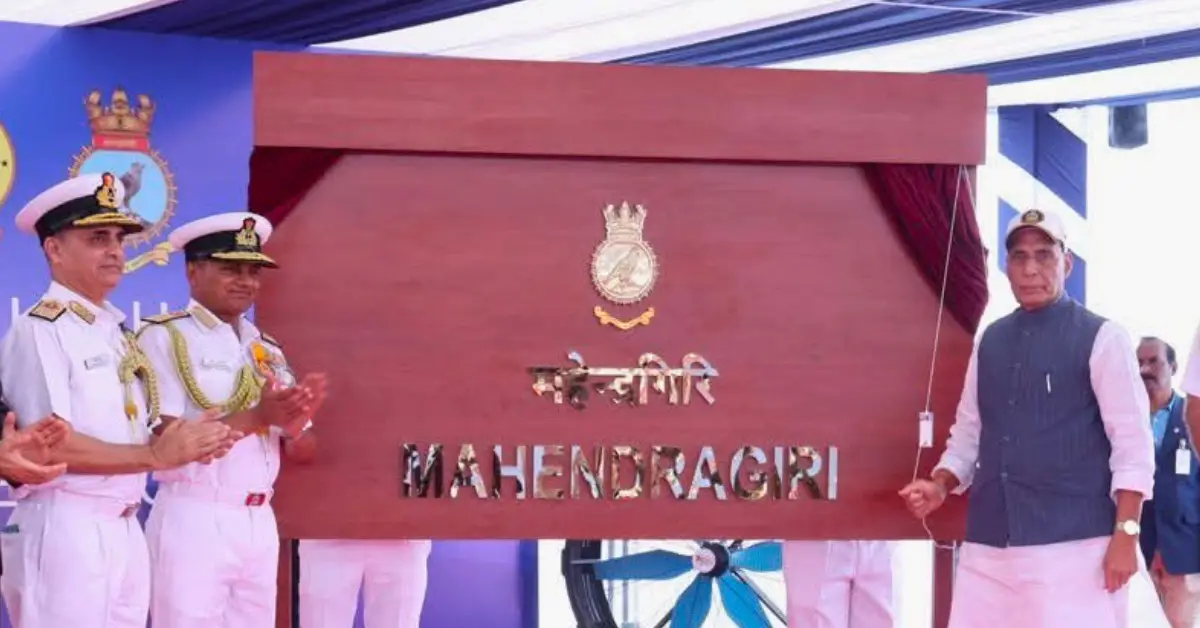
Visakhapatnam, 11 July: The Indian Navy commissioned the indigenously designed and built stealth frigate INS Mahendragiri into its Eastern Fleet on Saturday, strengthening India’s maritime combat capability and operational reach in the Indian Ocean Region.
Defence Minister Rajnath Singh presided over the commissioning ceremony at Visakhapatnam. INS Mahendragiri is the sixth Project 17A stealth frigate inducted into the Navy within around 18 months.
The first ship of the series, INS Nilgiri, was commissioned in January 2025. It was followed by INS Udaygiri and INS Himgiri in August, INS Taragiri in April 2026 and INS Dunagiri in June.
Designed by the Indian Navy’s Warship Design Bureau and constructed by Mazagon Dock Shipbuilders Limited in Mumbai, INS Mahendragiri has more than 75 per cent indigenous content.
Named after the Mahendragiri mountain range in the Eastern Ghats, the frigate carries the motto “Mighty, Majestic, Matchless.”
More than 200 Indian industries, including several micro, small and medium enterprises, contributed to the construction of the frigate.
The warship has a displacement of approximately 6,670 tonnes and can attain speeds of up to 28 knots. It is capable of undertaking fleet air defence, anti-surface warfare, anti-submarine warfare, maritime interdiction, surveillance and humanitarian assistance and disaster-relief operations.
INS Mahendragiri is equipped with supersonic surface-to-surface missiles, medium-range surface-to-air missiles, an indigenous rocket launcher, torpedo launchers, an integrated anti-submarine defence system, electronic warfare equipment and a close-in weapon system.
The frigate can also operate a multi-role helicopter and incorporates advanced stealth characteristics, modern sensors, network-centric combat systems and an integrated platform management system.
Read also : Uranium deal, maritime security, cyber and critical tech push: Key outcomes of PM Modi’s Australia visit
Rajnath Singh said the warship would extend India’s blue-water reach, strengthen the eastern seaboard and consolidate the country’s presence in the Indian Ocean Region.
He said maritime security was closely linked with trade, supply chains, energy security and economic growth. He also highlighted the Navy’s role in humanitarian assistance, anti-piracy operations and the evacuation of Indian and foreign nationals from crisis-hit regions.
According to the Defence Ministry, the Indian Navy escorted 18 merchant vessels carrying essential cargo valued at more than ₹9,000 crore under Operation Urja Suraksha during the West Asia conflict.
Chief of the Naval Staff Admiral Krishna Swaminathan said the Project 17A programme had achieved improvements in construction and delivery timelines.
The period between launching and delivery was reduced by approximately 50 per cent, from 63 months to 31 months. The total construction period declined by around 20 per cent, from 95 months to 75 months.
The Navy also completed all technical assessments during a single sea trial instead of the usual five to seven trials. The ministry attributed the achievement to coordination among the Navy, MDL, Indian manufacturers, MSMEs, trial agencies and the ship’s crew.
Read also : India’s indigenous Pinaka long-range guided rocket hits target with precision in flight test