The Geological Survey of India (GSI) has proposed 1,068 scientific projects for the field season 2026-27, with a significant focus on exploration of critical and strategic minerals, according to a release issued by the Ministry of Mines on Tuesday.
The plan was presented during the 65th meeting of the Central Geological Programming Board (CGPB), held in New Delhi. Of the total projects proposed for 2026-27, exploration-related activities account for about 55 per cent.
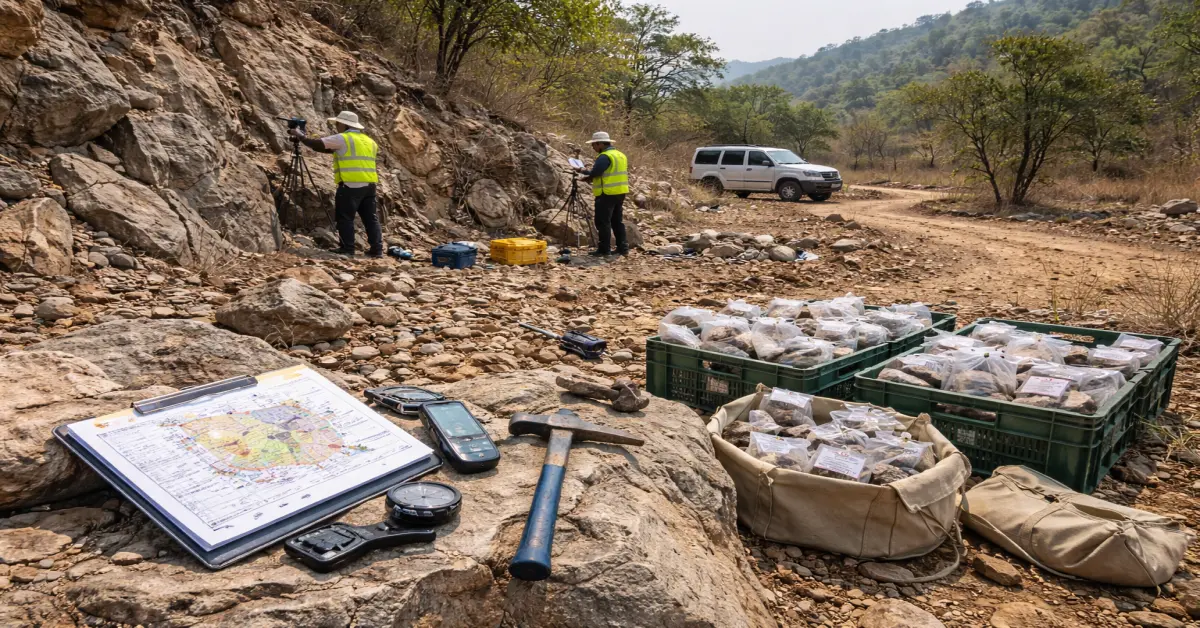
For the upcoming field season, GSI has formulated 236 projects specifically focused on critical minerals. The programme also includes about 37 projects in international border regions, of which 16 are mineral exploration projects spread across the western, eastern, northern and north-eastern regions of the country.
The exploration plan reflects a shift towards advanced-stage assessment. The number of G3 stage exploration projects is set to increase by about 46 per cent in 2026-27, indicating a move towards outcome-oriented and resource-bearing exploration.
In addition to mineral exploration, GSI has outlined 144 projects under natural hazard studies, public good geoscience and fundamental geoscience. These projects cover landslide and geotechnical investigations, glaciological and polar research, climate change studies and core geoscientific research.
The programme also includes 58 geoinformatics and data analysis projects, focusing on geospatial data generation, integration, analysis and dissemination. These projects involve the use of artificial intelligence and machine learning tools, legacy data integration and other digital technologies to improve exploration efficiency.
For training and capacity building, GSI has proposed 160 training programmes aimed at personnel from central institutions, state governments, public sector undertakings, private sector entities and academic institutions.
During the meeting, it was stated that GSI would take up about 300 projects focused on critical and strategic minerals during the 2026-27 field season. The Ministry of Mines also indicated that exploration agencies would be required to complete projects within stipulated timelines and make use of the National Geoscience Data Repository to avoid duplication of work.
The meeting also included technical sessions on critical mineral exploration, recovery of minerals from mine dumps and tailings, subsurface data management and landslide hazard forecasting. An exhibition highlighting exploration initiatives by GSI, public sector units, private agencies and start-ups was held alongside the meeting.