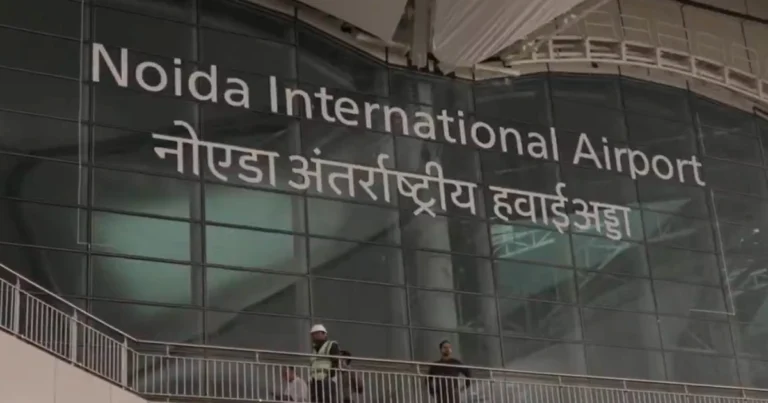
The Ministry of Civil Aviation on Wednesday released its year-end review for 2025, outlining airport infrastructure additions, regulatory interventions, passenger traffic milestones, and policy actions undertaken during the year .
Airport infrastructure and capacity additions
New airports and terminal facilities were inaugurated during the year at Navi Mumbai, Patna, Datia, Satna, Amravati, Thoothukudi, Purnea and Guwahati. The new terminal at Jay Prakash Narayan International Airport in Patna was developed at a cost of Rs 1,200 crore, covers 65,150 square metres, and is designed to handle 3,000 peak-hour passengers and up to one crore passengers annually .
The integrated terminal at Lokapriya Gopinath Bordoloi International Airport in Guwahati spans nearly 1.4 lakh square metres and has an annual handling capacity of 1.3 crore passengers. Navi Mumbai International Airport was inaugurated on October 6, 2025, becoming Mumbai’s second international airport .
A greenfield airport at Kota-Bundi in Rajasthan was approved by the Cabinet Committee on Economic Affairs at an estimated cost of Rs 1,507 crore. The project includes a 20,000 square metre terminal capable of handling 1,000 peak-hour passengers and 20 lakh passengers per annum .
Passenger traffic and flight operations
India recorded its highest-ever domestic passenger traffic on a single day on November 23, 2025, when airlines carried 5,38,429 passengers across 3,356 domestic flights. This represented 88.66 per cent of scheduled flights operating on that day .
During the Mahakumbh 2025 period, Prayagraj Airport handled over 5,80,000 passengers following terminal expansion from 6,700 to 18,500 square metres, increasing peak-hour capacity to 2,700 passengers .
Airlines, fares and regulatory actions
The Ministry granted no-objection certificates for three new airlines – Shankh Air, Al Hind Air and FlyExpress – during 2025 .
During operational disruptions in IndiGo’s network, the Ministry invoked its regulatory powers to enforce fare caps on affected routes. These directives were issued to prevent fare escalation and remained in force until operations stabilised .
The Bureau of Civil Aviation Security revoked the security clearance of Celebi and its associated companies on May 15, 2025, citing national security grounds .
Passenger grievance redressal
A permanent 24×7 Passenger Assistance Control Room (PACR) was established at Udaan Bhawan in New Delhi to monitor operations and address passenger grievances. As of mid-January 2026, more than 14,000 grievances had been resolved through the PACR since December 3, 2025, along with over 500 call-based passenger interventions .
Licensing, safety and international engagements
The Directorate General of Civil Aviation issued 1,628 Commercial Pilot Licences in 2024, the highest number recorded in India, exceeding the previous year’s total. The DGCA also added 10 new aeromedical evaluation centres in October 2025 to expand pilot medical examination capacity .
India was re-elected to Part II of the International Civil Aviation Organization Council for the 2025-2028 term during the 42nd ICAO Assembly held in Montreal in September 2025 .
The Ministry also reported the inauguration of a Flight Data Recorder and Cockpit Voice Recorder laboratory at the Aircraft Accident Investigation Bureau in April 2025, established at a cost of Rs 9 crore.