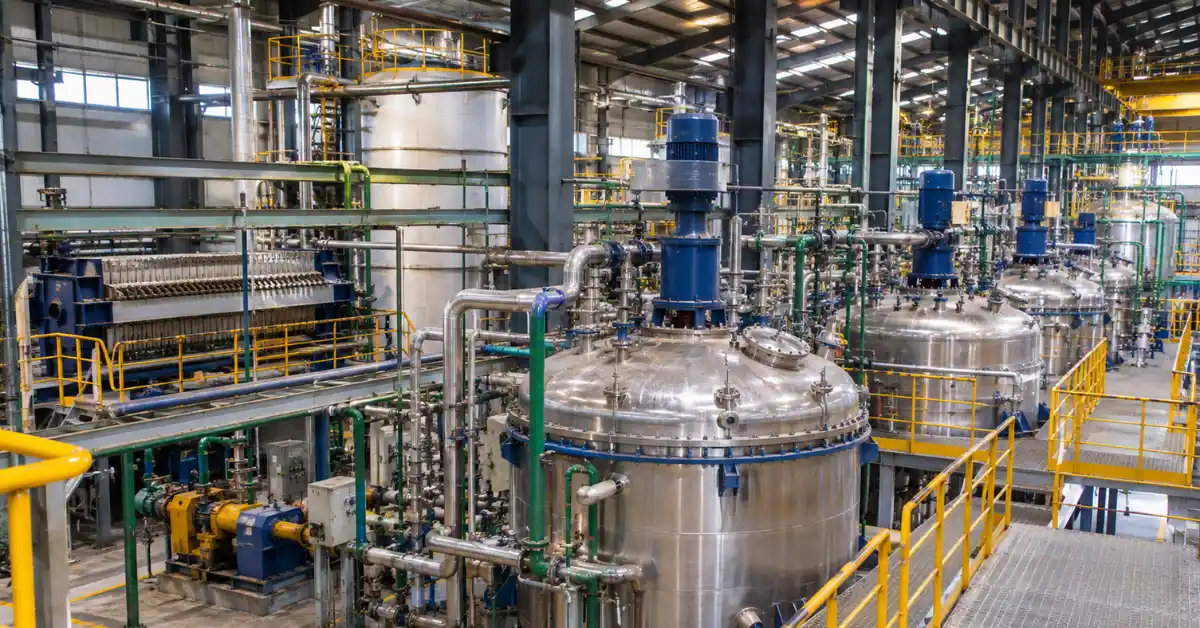
New Delhi, November 5: The Union Cabinet has approved a ₹2,814-crore scheme to help companies establish four lithium and nickel processing plants in India, aiming to reduce the country’s dependence on imported materials used in electric vehicle batteries, energy storage systems and other industries.
The scheme, approved by the Cabinet chaired by Prime Minister Narendra Modi on November 4, will provide financial assistance to companies setting up facilities to process lithium and nickel ores and intermediate materials into high-purity compounds. The government plans to support two lithium processing plants and two nickel processing plants under the programme.
India currently depends heavily on imports of processed critical minerals and high-purity materials because it has limited domestic facilities to refine them for industrial use. The government expects the scheme to encourage investment in domestic processing facilities and strengthen supplies for industries that rely on these minerals.
The ₹2,814-crore programme will run for five financial years, from 2026-27 to 2030-31. Each lithium processing facility must have a minimum capacity of 30,000 tonnes, while each nickel processing facility must have a minimum capacity of 50,000 tonnes, according to the Cabinet announcement.
Selected companies will be eligible for a capital subsidy covering up to 30% of their qualifying investment. However, government assistance will be capped at ₹500 crore per lithium processing project beneficiary and ₹900 crore per nickel processing project beneficiary.
The financial support is intended to reduce the high initial investment required to establish mineral processing facilities, which involve specialised technology, industrial equipment and infrastructure.
Companies seeking assistance will be selected through a two-stage competitive bidding process. In the first stage, applicants will be assessed against technical requirements to determine whether they are capable of establishing and operating the proposed facilities.
Only technically qualified applicants will proceed to the second stage, where their financial bids will be evaluated. The government will select two beneficiaries for each mineral based on the lowest amount of financial assistance sought.
The subsidy will be released in three instalments linked to specified project milestones. This means selected companies will receive financial support as they achieve the required stages of project development rather than receiving the entire amount upfront.
The proposed facilities will process lithium and nickel ores and intermediate materials into high-purity compounds suitable for industrial use. The government also expects cobalt to be recovered as a by-product during nickel processing.
Lithium, nickel and cobalt are important materials used in several types of rechargeable batteries. Developing domestic processing facilities could help India’s battery and electric vehicle manufacturers obtain more of these materials from suppliers within the country.
The government also expects the scheme to support industries such as battery energy storage systems, electronics, defence equipment and speciality steel manufacturing.
According to the Cabinet announcement, critical mineral processing is concentrated in a limited number of countries. This leaves industries dependent on international supply chains that can be affected by trade restrictions, geopolitical tensions and changes in global prices.
The government said the scheme would help address high investment costs and limited domestic processing capacity while encouraging companies to establish mineral refining facilities in India.
However, the Cabinet announcement did not identify the companies that would receive financial assistance or specify the locations of the four proposed plants. It also did not provide individual construction schedules or completion dates.
The approved programme focuses on processing critical minerals rather than developing new mines. While it could help India produce more high-purity lithium and nickel compounds domestically, it would not necessarily eliminate the need to import raw materials.
The locations, beneficiaries and implementation schedules of the four processing plants will become clearer following the selection process and subsequent project development.
Read also: ₹80,000 crore investment and 10,000 jobs: Vedanta weighs major power and aluminium expansion in West Bengal
Read also: Tata Projects wins contract to build two Gujarat chemical plants that could cut GSFC’s dependence on imported fertiliser raw materials