New Delhi, October 25, 2026: Delhi has opened a new air pollution analysis laboratory designed to identify the sources of harmful pollutants, examine their chemical composition and help authorities take targeted action against deteriorating air quality. The facility is integrated with a forecasting system that provides air quality predictions up to 72 hours in advance at a spatial resolution of 400 metres.
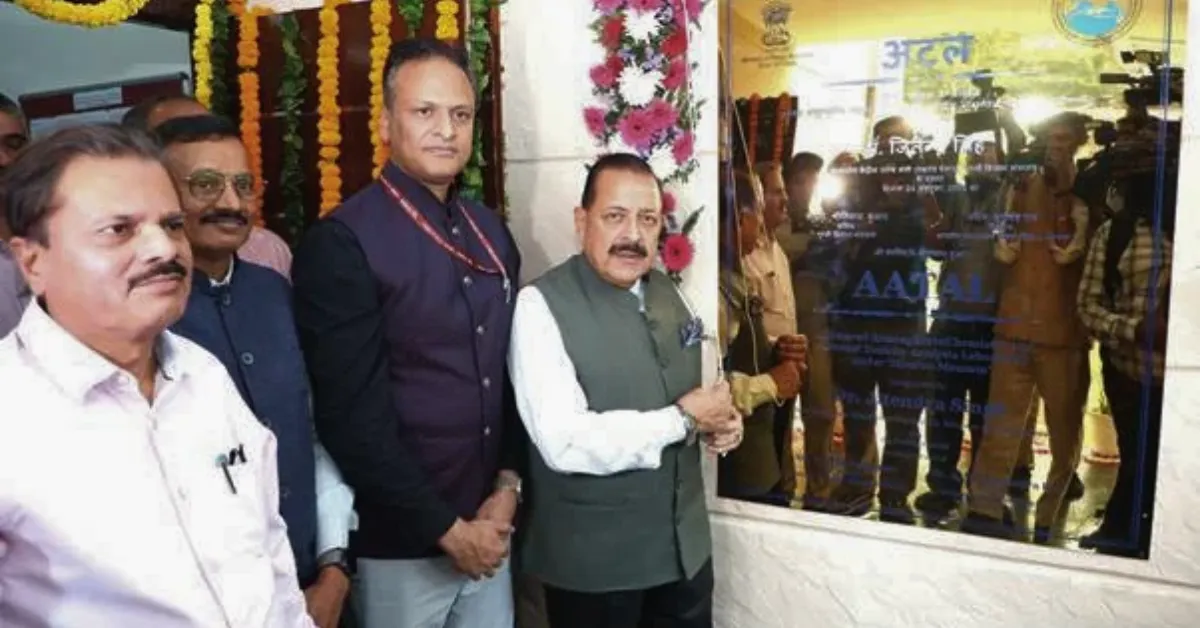
Union Minister of State for Earth Sciences Jitendra Singh inaugurated the Integrated Atmospheric Chemistry and Aerosol Toxicity Analysis Laboratory (AATAL) on October 24 at the Delhi branch of the Indian Institute of Tropical Meteorology (IITM).
Established under the government’s Mission Mausam programme, AATAL has been described by the Ministry of Earth Sciences as the world’s first integrated laboratory of its kind.
Unlike conventional air quality monitoring systems that primarily measure pollutant concentrations, the new facility can analyse the chemical composition of pollutants, identify their likely sources and assess their potential toxicity.
The laboratory is equipped to study atmospheric gases and airborne particles, including PM2.5, metals and other potentially harmful components.
It can also estimate the contributions of different pollution sources, including vehicle emissions, industrial activity, crop-residue and biomass burning, construction dust, road dust and pollutants transported from neighbouring regions.
During the inauguration, Singh highlighted a real-time display indicating that transport accounted for approximately 25% of the pollution being measured at that moment, when the overall pollution reading was around 180.
The figures demonstrated the system’s ability to identify changing pollution sources. However, the 25% transport contribution was a momentary observation and should not be interpreted as a daily average or a fixed share of Delhi’s pollution.
The facility is integrated with IITM’s Air Quality Warning and Integrated Decision Support System for Emissions (AIRWISE), which combines pollution measurements with forecasting capabilities.
According to the ministry, AIRWISE provides forecasts for the next 72 hours at a spatial resolution of 400 metres, allowing authorities to assess how pollution conditions may vary across different neighbourhoods.
The 400-metre resolution refers to the geographical detail of the forecasts rather than the spacing of physical air quality monitoring stations.
The laboratory’s findings and AIRWISE forecasts are intended to support the Commission for Air Quality Management (CAQM) and other pollution-control agencies operating across Delhi-NCR.
By identifying the major contributors to pollution in specific areas, the system could help authorities prioritise interventions and assess the effectiveness of measures introduced under the Graded Response Action Plan (GRAP).
For example, if vehicle emissions are found to be a significant contributor in a particular location, authorities could use that information when considering transport-related pollution-control measures.
Similarly, identifying pollution transported from neighbouring regions could help agencies coordinate responses beyond Delhi’s boundaries.
Speaking at the inauguration, Singh emphasised the importance of coordination among scientific institutions, government departments and pollution-control agencies.
He said tackling air pollution required a coordinated approach rather than action by individual departments working independently.
The facility combines chemical analysis, pollution-source identification, toxicity assessment and forecasting to provide a more detailed understanding of Delhi-NCR’s air pollution.
However, identifying pollution sources does not itself reduce emissions. Actual improvements in air quality will depend on how effectively the findings are used to design and enforce pollution-control measures.
The ministry has not reported any measurable reduction in pollution levels resulting from the laboratory’s inauguration.
The development is intended to help authorities move beyond measuring pollution concentrations towards identifying their sources, locating affected areas and determining which interventions may be most effective.
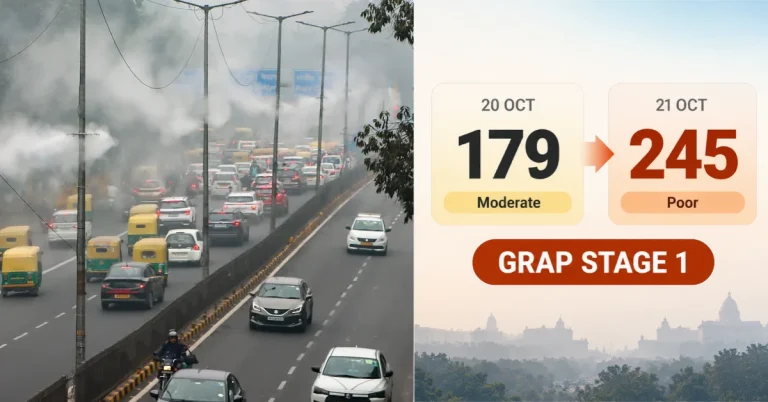
Read also: Delhi’s AQI jumps from 179 to 245 in a day, triggering GRAP Stage 1 restrictions across NCR