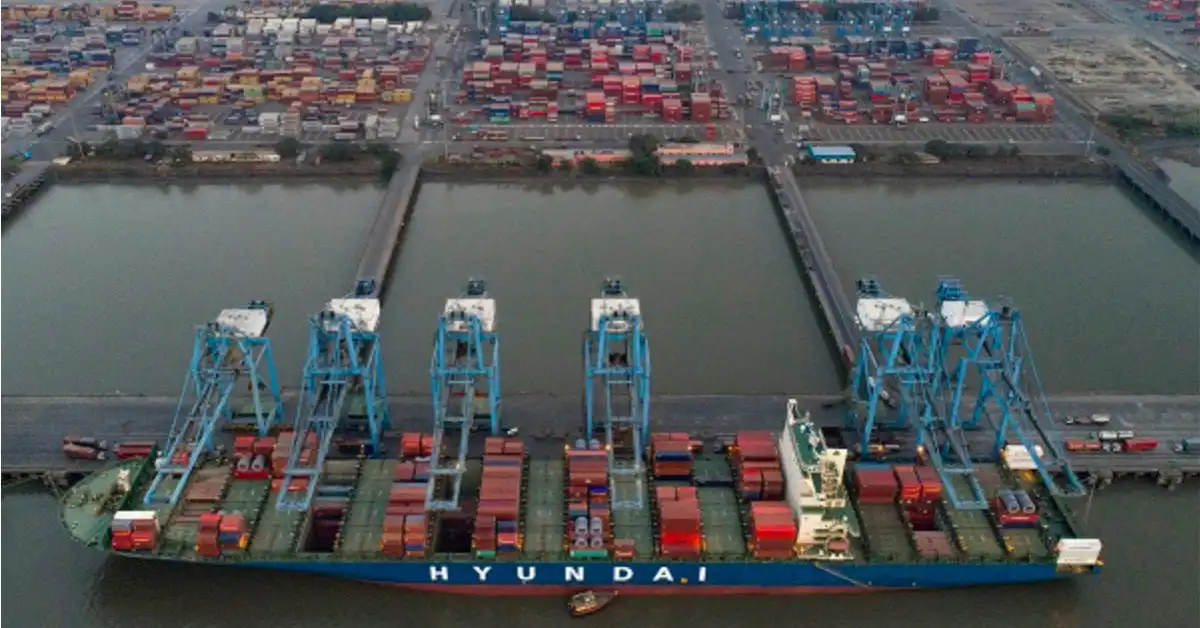
The Government has initiated a coordinated response to ease port congestion at Jawaharlal Nehru Port Authority (JNPA) after a shortage of trailer drivers at Container Freight Stations (CFSs) delayed the evacuation of 25,000 import containers, the Ministry of Ports, Shipping and Waterways said in a statement on Friday, 22 May.
Union Commerce and Industry Minister Piyush Goyal and Union Ports, Shipping and Waterways Minister Sarbananda Sonowal reviewed the congestion issue with representatives of the All India Liquid Bulk Importers and Exporters Association and other EXIM stakeholders.
The Ministry said the meeting focused on container congestion caused by the CFS trailer driver shortage and discussed immediate and long-term measures to ease bottlenecks affecting cargo movement.
JNPA has implemented a series of operational interventions to decongest terminals and expedite cargo evacuation.
Containers are being moved through rail even to nearby CFSs equipped with railway sidings, while simultaneous scanning of double containers has been introduced to reduce processing time.
To provide relief to trade stakeholders, Intern-Terminal Railway Handling Operation (ITRHO) charges and Change of Mode of Transport charges have been waived.
Port terminals have also extended waivers and discounts on ground rent charges on a case-to-case basis.
Dedicated green channels for empty trailers have been established across terminals to support faster turnaround.
Leading CFS operators have pooled nearly 100 trailers to lift entire container stacks, enabling the evacuation of long-pending and buried containers from congested yards.
Read also:
According to the Ministry, these coordinated measures have improved yard management and reduced the number of containers lying at terminals for more than 14 days.
Further efforts are underway to allow importers direct access to port terminal yards to pick up containers.
Authorities are also working on matching export trailers with import containers from the port.
Sonowal said the government is taking coordinated and proactive measures across ports and logistics systems to sustain Ease of Doing Business, strengthen supply chain resilience and build a globally competitive maritime ecosystem.
He said the government is committed to building a resilient, efficient and future-ready trade and logistics ecosystem and taking swift measures to protect the interests of the EXIM community.
As part of a long-term resilience strategy, JNPA has outlined a roadmap to strengthen logistics preparedness and future cargo handling capabilities.
The measures include efforts by CFS operators and transporters to increase driver availability, enhanced cargo evacuation through railways and engagement with motor driving training schools to build a larger pool of trained trailer drivers.
The port authority is also planning a gradual transition to electric vehicles to improve operational sustainability and driver comfort.
A Truck Appointment System is being introduced to reduce congestion at terminal gates, while terminals are being encouraged to deploy additional handling equipment to support rising cargo volumes.
Read also: