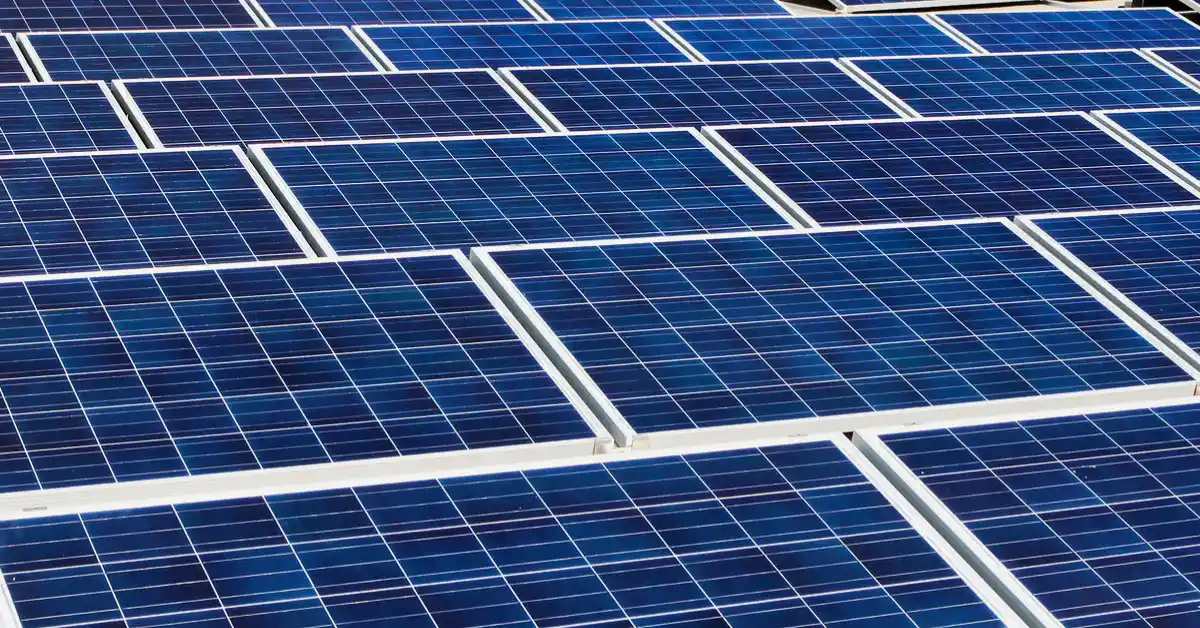
Union Minister Jitendra Singh on Thursday, 14 May, dedicated Central Electronics Limited’s 200 MW solar module manufacturing line to the nation, marking a capacity addition at the public sector enterprise as India seeks to expand domestic clean-energy manufacturing.
The facility has been operationalised at CEL, a Mini Ratna enterprise under the Department of Scientific and Industrial Research.
The inauguration comes as India is expanding non-fossil energy capacity across solar, wind, nuclear and ocean-based energy systems while working towards its net-zero emissions target for 2070.
Addressing the event, Singh said renewable energy and clean energy would play a major role in India’s growth trajectory.
He said each renewable energy source has its own utility and importance, and India is moving ahead with an integrated approach towards clean-energy expansion and sustainable development.
The 200 MW line is also part of CEL’s institutional revival story.
Singh recalled that CEL manufactured India’s first solar cell in 1977 and established the country’s first solar plant in 1979.
He said the organisation’s early contribution to India’s renewable-energy journey did not receive adequate recognition at the time, but CEL is now gaining renewed national relevance.
The minister said CEL’s shift from an institution once close to disinvestment to a profit-making, revenue-generating Mini Ratna enterprise reflected leadership, policy support, operational discipline and the collective efforts of its scientists, engineers and employees.
Singh also highlighted the speed at which the new manufacturing line was established.
The Request for Proposal for the project was floated on 24 April 2025, the successful bidder was selected within one month, and the manufacturing facility became operational in less than a year.
CEL’s own tender record shows the project was structured as a 200 MWp solar module manufacturing line at CEL Sahibabad on a revenue-sharing model under the Make in India initiative.
Read also : ₹37,500 crore coal gasification scheme approved to cut LNG, urea and methanol imports
The company had also announced in 2025 that it was expanding solar manufacturing capacity from 40 MW to 200 MW through a strategic partnership in public-private partnership mode.
The commissioning comes at a time when India’s solar manufacturing sector is expanding rapidly but also facing questions over scale, technology transition and market absorption.
The event also included technology collaboration initiatives between CSIR laboratories and CEL in areas linked to renewable energy and indigenous systems development.
Singh welcomed technology transfer initiatives involving CSIR-National Aerospace Laboratories and CEL for the Automated Weather Observing System and the new-generation Drishti Transmissometer System.
He said technologies developed in national laboratories must move towards commercialisation and public use through industry partnerships.
The minister also said the new-generation Drishti Transmissometer System has become fully indigenous, strengthening manufacturing capability and strategic self-reliance.
Beyond solar manufacturing, Singh said CEL is expanding into future-oriented areas including vertical axis wind turbines, hybrid renewable systems, data centres, advanced defence electronics, electronic warfare and small weapon systems.
He also linked the development to wider policy reforms in strategic sectors, saying India has opened up sectors such as space and nuclear energy to greater private participation and is moving ahead with plans involving advanced nuclear technologies and small modular reactors.
Secretary, DSIR and Director General, CSIR, N Kalaiselvi; CEL CMD Chetan Jain; senior scientists; directors of CSIR laboratories; CEL officials and other guests were present at the event.
Singh said the dedication of the 200 MW solar module manufacturing line marks another step towards Viksit Bharat 2047 and reflects India’s growing ability to convert scientific capability into national development.
Read also : Karnataka to get 1,243 new EV chargers under PM E-DRIVE Scheme with ₹123.26 crore financial outlay