India’s plan to transform itself into a global aviation hub could generate around 16 million direct and indirect jobs and contribute nearly $1.4 trillion to the economy by 2047, Union Civil Aviation Minister Ram Mohan Naidu has said
Naidu on Thursday, 23 April, chaired a high-level meeting with all key stakeholders to review the readiness of Delhi Airport for the implementation of hub-and-spoke operations.
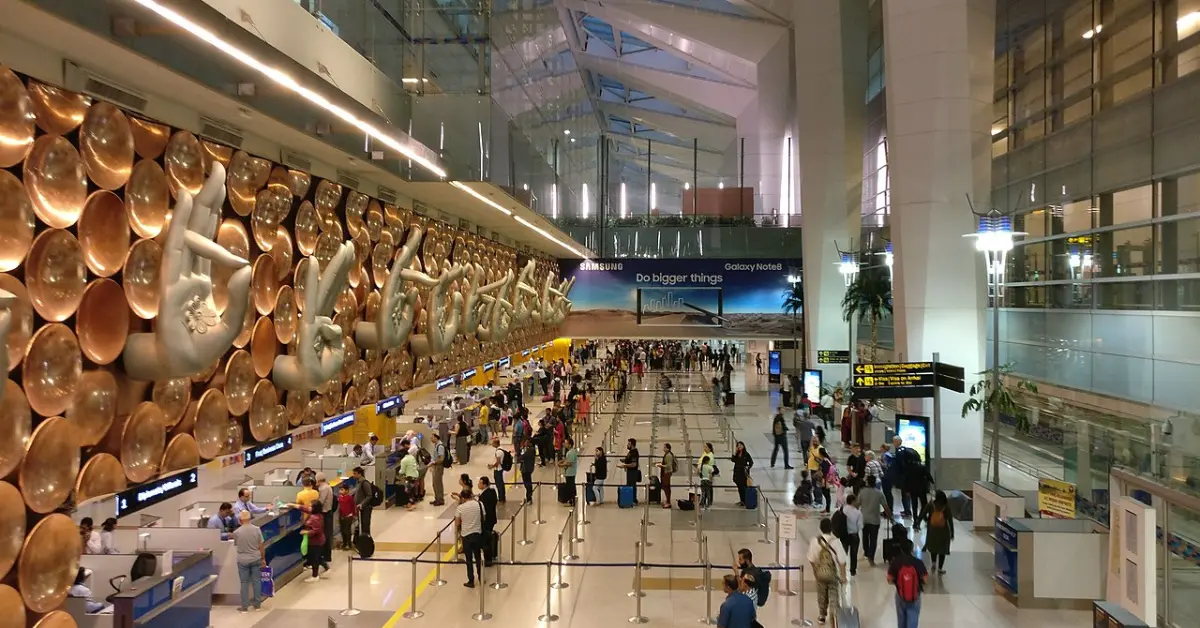
The minister also led a delegation for an on-ground walkthrough of passenger flow systems and inspected the Security Hold Area (SHA) at Terminal 3 of Delhi Airport to assess operational preparedness.
According to a statement by the Civil Aviation ministry, the National Civil Aviation Policy (NCAP) 2016 laid out a clear roadmap for positioning India as an aviation hub of choice for Indian passengers by 2030 and for the world by 2047.
In furtherance of this vision, the Government has developed an International Aviation Hub Strategy, under which several key measures have been undertaken, the ministry added.
These include adopting a calibrated approach in granting Points of Call to foreign carriers, particularly for non-metro destinations, renegotiating bilateral agreements in a manner that strengthens Indian carriers and promotes domestic hubs and liberalizing domestic code-share arrangements to enable Indian airlines to expand their global reach.
During the deliberations, the Minister Ram Mohan Naidu stated, “India’s unique geographical location between the eastern and western hemispheres provides a natural advantage in emerging as a global transit hub. And we have developed the strategy after extensive deliberations with all the stakeholders and I am deeply grateful to Hon’ble Home Minister Shri Amit Shah Ji for his active support in advancing the proposal.”
The strategy marks a structural shift in India’s aviation model – from being largely an end-destination market to emerging as a global transit hub capable of capturing a significant share of international transfer traffic.
At present, nearly 35 per cent of international passengers travelling from India transit through foreign hubs such as Dubai, London and Singapore.
The government’s plan aims to reverse this trend by strengthening Indian airports as global transit points.
Delhi Airport is expected to play a central role in this transition, given its capacity of over 100 million passengers annually, handling of nearly 50 per cent of northern region traffic, and around 50,000 daily transfers.
The hub-and-spoke model will integrate Tier-II and Tier-III airports developed under the UDAN scheme with international routes, allowing passengers from smaller cities to connect seamlessly via major hubs.
Sharing the government’s hub vision, Minister Ram Mohan Naidu stated, “At present, nearly 35 percent of international passengers travelling from India transit through foreign hubs such as Dubai, London and Singapore. Our aim is to reverse this trend by developing globally competitive Indian hubs like Delhi, Mumbai, Bangalore, Hyderabad, Kolkata and Chennai.”
In addition to passenger facilitation, the strategy places strong emphasis on strengthening India’s position as a global air cargo hub.
Measures such as the elimination of re-screening requirements for transshipment cargo and the digitization of cargo-related approvals and documentation processes are expected to significantly enhance efficiency and reduce turnaround times.
The implementation of the hub-and-spoke model will also enable airlines to deploy their aircraft more efficiently for international operations, while contributing to decongestion at major airports by decentralizing customs and immigration processes to spoke locations.
Under the hub-and-spoke model, passengers arriving from various smaller cities will be consolidated in a coordinated manner and routed through major hub airports such as Delhi for onward international connections. Outbound flights will carry both originating domestic passengers and international transit passengers.
At the spoke airport, passengers will be issued two separate boarding passes, clearly marked with ‘D’ (domestic) and ‘I’ (international) indicators.
Customs and immigration formalities for outbound passengers will be completed at the first point of exit from the country, which will be the spoke airport, and passengers on such outbound journeys will not have access to customs declaration facilities during transit.
For inbound passengers, customs and immigration processes will take place at the final point of entry into the country, which will again be the spoke airport.
The model further envisages that baggage for both inbound and outbound international passengers will be transferred seamlessly through airside operations at the hub airport, eliminating the need for passenger intervention.
In order to maintain operational efficiency and regulatory clarity, combination flights will not be permitted, and separate aircraft will be deployed for the domestic and international segments of hub-and-spoke operations.
The adoption of technology-driven solutions, including DigiYatra, will further streamline the movement of passengers, particularly those transferring between domestic and international segments.
Highlighting the significance of the model, Minister Ram Mohan Naidu mentioned, “The hub-and-spoke model is also set to have far-reaching economic implications along with increased connectivity across regions. By 2047, the cumulative impact of this initiative is projected to generate approximately 16 million direct and indirect jobs and contribute nearly USD 1.4 trillion to the Indian economy.”
In parallel, Indian airlines are expanding long-haul capabilities through significant wide-body aircraft orders, aligning fleet strategy with the hub development roadmap.
According to the ministry, Delhi Airport has initiated work on creating slot banks to facilitate quicker and more efficient passenger transfers.
With execution now moving to the operational stage, the success of the hub-and-spoke model will depend on coordinated implementation across airports, airlines, regulatory bodies and digital infrastructure – a shift that could redefine India’s position in global aviation networks.
Read also : India, South Korea expand maritime cooperation across shipbuilding, ports and logistics