India on Monday (3 February) moved closer to strengthening its next-generation air combat arsenal after successfully demonstrating a key missile propulsion technology that could significantly extend the reach of future air-to-air weapons.
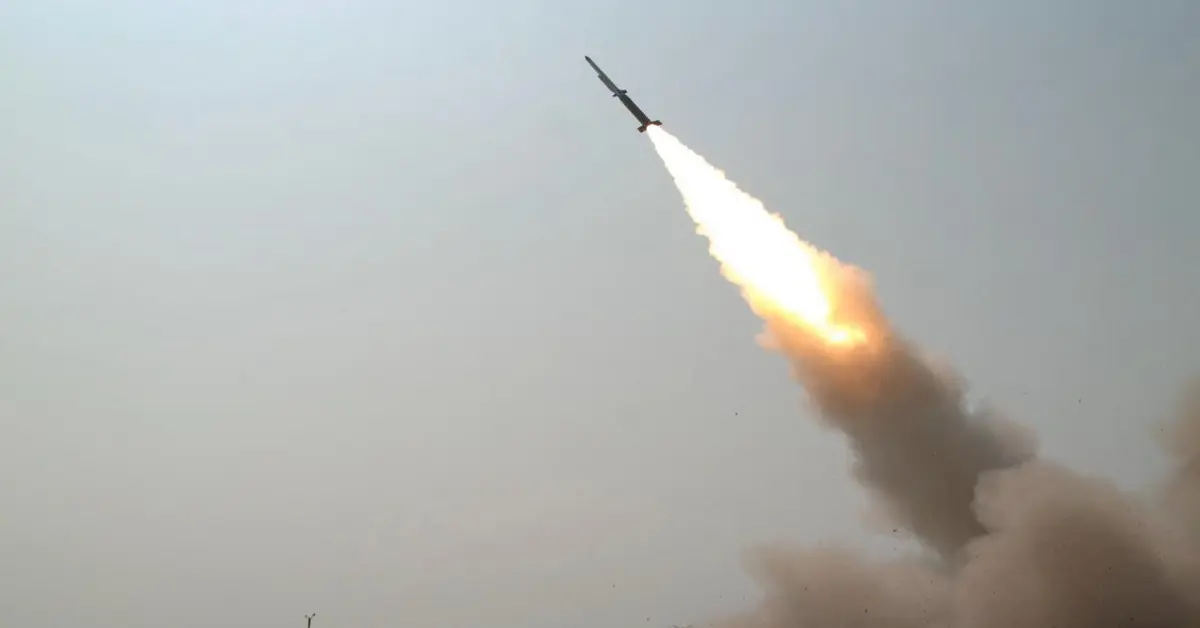
The Defence Research & Development Organisation (DRDO) conducted the test of its Solid Fuel Ducted Ramjet (SFDR) technology from the Integrated Test Range at Chandipur, off the Odisha coast, at around 1045 hrs on 3 February 2026.
The achievement places India “into an elite league of nations possessing this technology” capable of enabling long-range air-to-air missiles designed to provide a tactical edge over adversaries, the Ministry of Defence said in a statement.
Unlike conventional rocket propulsion, ducted ramjet systems allow sustained high-speed flight by regulating airflow and fuel combustion more efficiently, a capability seen as critical for modern beyond-visual-range engagements.
Read also : India steps up military modernisation with ₹2.19 lakh crore defence capital outlay
According to the DRDO, During the test, all major subsystems – including the nozzle-less booster, solid fuel ducted ramjet motor and fuel flow controller – “performed as per expectations” after the vehicle was initially propelled by a ground booster motor to the desired Mach number.
The system’s performance was validated using flight data gathered from multiple tracking instruments deployed along the Bay of Bengal coastline.
The launch was overseen by senior scientists from several DRDO facilities, including the Defence Research & Development Laboratory, High Energy Materials Research Laboratory, Research Centre Imarat and the test range itself.
Defence Minister Rajnath Singh “complimented DRDO, and Industry on the successful demonstration of SFDR technology,” while Secretary, Department of Defence R&D and DRDO Chairman Samir V Kamat congratulated the teams involved in the flight test.
The demonstration is expected to support the development of future indigenous missile systems at a time when air forces worldwide are prioritising longer engagement ranges and higher survivability in contested airspace.