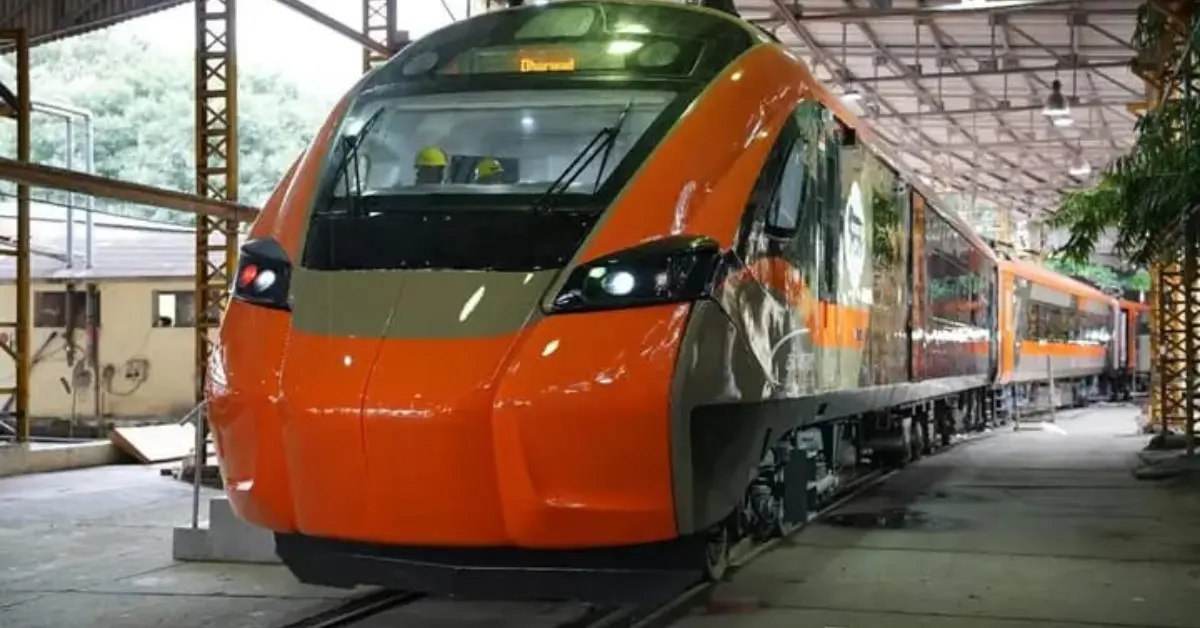
Indian Railways has planned the manufacture of a 24-coach Vande Bharat Sleeper trainset in response to growing demand for premium long-distance overnight rail services and encouraging passenger feedback from the first sleeper variant currently in operation.
The first Vande Bharat Sleeper rake was flagged off by the Prime Minister on 17 January 2026 from Malda Town on the Howrah-Kamakhya (Guwahati) route. According to the Railway Ministry, passengers have responded positively to the train’s comfort, modern interiors and improved overnight travel experience.
Based on this response, Indian Railways has decided to move ahead with a larger 24-coach configuration, which will be manufactured at the Integral Coach Factory under the Make in India initiative. The expanded trainset is currently in the design stage, with the prototype targeted for rollout by the end of 2026.
The proposed coach composition includes 17 AC 3-Tier coaches, 5 AC 2-Tier coaches, one AC First Class coach and one dedicated AC Pantry Car. With this formation, each train will offer a total passenger capacity of 1,224 berths, compared to 823 berths in the existing 16-coach version. This translates to an additional 401 berths per trainset, allowing Railways to better serve high-demand overnight corridors.
A key feature of the 24-coach Vande Bharat Sleeper is the inclusion of a full-fledged AC Pantry Car to strengthen onboard catering services. Mini-pantry spaces and linen storage areas are also being planned across coaches to support efficient service management during long journeys.
Passenger amenities proposed for the new trainset include ergonomically designed berths, integrated reading lights, mobile and laptop charging points, Wi-Fi-enabled passenger information and infotainment systems, vacuum-assisted toilets, improved luggage spaces and modern interior fittings. Special provisions for Divyangjan passengers, including accessible toilets and ramps, are part of the design.
From a technical and safety standpoint, the train is being planned with advanced propulsion and control systems, regenerative braking for energy efficiency, crashworthy stainless-steel car bodies and fire safety measures aligned with international standards. CCTV surveillance, intelligent diagnostics and integration of the Kavach train collision avoidance system are also proposed. The maximum operational speed of the trainset is planned at 160 kilometres per hour.
Energy-efficient features such as LED lighting, regenerative braking and vacuum bio-toilets, along with predictive maintenance systems and remote condition monitoring, are being incorporated to improve reliability and lifecycle performance.
According to the Railway Ministry, the introduction of the 24-coach Vande Bharat Sleeper reflects Indian Railways’ continued focus on capacity augmentation, adoption of modern technology and delivery of enhanced comfort and safety for long-distance passengers.